





AED Wall Cabinets
Keep your defibrillator visible, protected and ready with AED wall cabinets built for public-access defibrillation programs. A dedicated cabinet gives staff, students and visitors a fixed, recognizable place to find the AED during a cardiac emergency, while protecting the device from dust, moisture and tampering between uses.
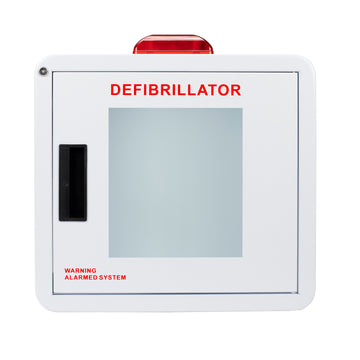
This collection is led by Cubix Safety cabinets in wall-mount, semi-recessed and fully recessed profiles, including alarmed and strobe-equipped models that draw attention the moment the door opens, plus non-alarmed steel cabinets for supervised areas. For outdoor and harsh locations, ARKY weatherproof cabinets provide high-impact storage. You will also find bleeding control cabinets that pair trauma supplies with your AED station.
The buying guide below covers cabinet types, alarms, sizing and placement, and what to check before you order.
- ✓Alarmed and strobe optionsDoor-activated sirens and strobe lights that draw attention the moment the cabinet opens.
- ⚙Three mounting profilesSurface-mount, semi-recessed and fully recessed cabinets for finished walls and hallways.
- ☀Outdoor and heated modelsWeather-sealed cabinets for exterior locations, with heated models for cold climates.
- ↔Sized to your AEDCabinets matched to your defibrillator stored in its carry case, the way it will be grabbed.
Buying for a facility, school, or agency?
- Request a quote with your cabinet count, mounting style and delivery locations.
- Purchase orders accepted.
- Tax exempt orders accepted. Send your exemption certificate with your quote request.
- Talk to a product specialist: 800-239-1797.
Choosing an AED cabinet: a short buying guide
A cabinet does more than hold the defibrillator. It keeps the device visible, protected from dust, moisture and tampering, and easy to reach in the first minutes of a cardiac emergency. The right cabinet depends on three things: the AED it has to fit, the wall it mounts on, and the environment it works in. The sections below walk through the choices.
Alarmed vs. non-alarmed cabinets, and strobe options
An alarmed AED cabinet sounds a siren (some models reach 90–120 dB) and often flashes a strobe light when the door opens. The alarm does two jobs: it alerts people nearby that an emergency is in progress, and it discourages tampering or theft the rest of the time. Non-alarmed cabinets are simpler and quieter, and are common in small offices and staffed locations where the AED is already in plain sight. If your AED sits in a public or semi-public space — a school corridor, gym, lobby or house of worship — an alarm with a strobe is the configuration most facilities choose.
Recessed, semi-recessed and surface-mount cabinets
Surface-mount cabinets attach directly to the wall face and project the full depth of the cabinet into the room; they are the easiest to install and the standard choice for concrete, block and finished walls. Recessed cabinets sit inside the wall cavity so only the door and frame sit proud of the surface. Semi-recessed cabinets split the difference, projecting only a few inches. Slim and recessed profiles are commonly chosen for hallways and corridors, where how far an object projects from the wall can matter — check your local building and accessibility requirements before choosing a mounting style for a corridor.
Sizing: matching the cabinet to your AED
Cabinets are sized by their interior dimensions, and your AED has to fit with its carry case on, the way it will actually be stored and grabbed. A common standard cabinet interior is about 17 × 17 × 7 inches, which fits most major AED brands, but larger devices, devices stored with a pediatric pad pack, and units kept in hard cases can need more room. Before ordering, measure your device in its case (height × width × depth) and compare against the cabinet’s listed interior dimensions. If you are between sizes or run an unusual device, call us at (800) 239-1797 and we will confirm the fit.
Outdoor and heated cabinets
An AED that serves a pool deck, sports field, parking area or job site may need outdoor-rated storage. Outdoor cabinets are built with weather-sealed construction; in cold climates, heated cabinets keep the device and its battery and pads within their operating temperature range through the winter. Indoor cabinets are not a substitute — if the device lives outside, choose a cabinet designed for it.
Where AED cabinets are typically placed
Placement guidance is general practice, not a legal determination: mount the cabinet in a visible, unobstructed location on a normal path of travel, mark it with AED signage so it can be spotted from a distance, and keep it close to the areas your AED program is meant to cover. Many programs aim for a retrieval time of about three minutes from anywhere in the facility. Your organization’s AED program requirements — and any state or local rules that apply to your building type — govern final placement, so confirm against those before installing.


You may also like:
Cubix Safety SR-S Semi-Recessed Compact AED Cabinet | Space-Saving Alarmed Storage
Factory Direct Ships 2-3 Days! (Estimated) View Product

You may also like:
ARKY Outdoor AED Cabinet | Weatherproof High-Impact Storage
Factory Direct Ships in 5-7 Business Days! (Estimated) View Product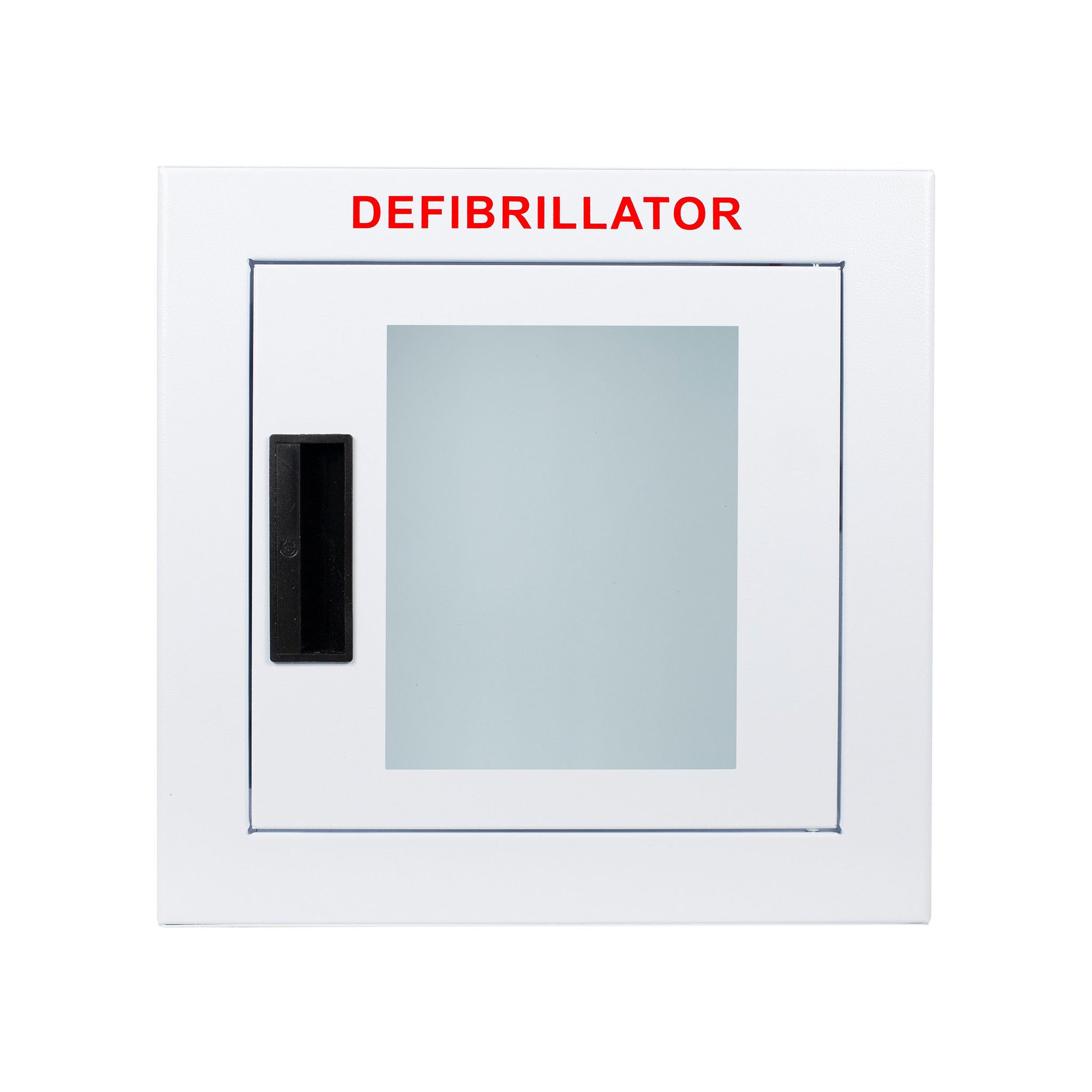
You may also like:
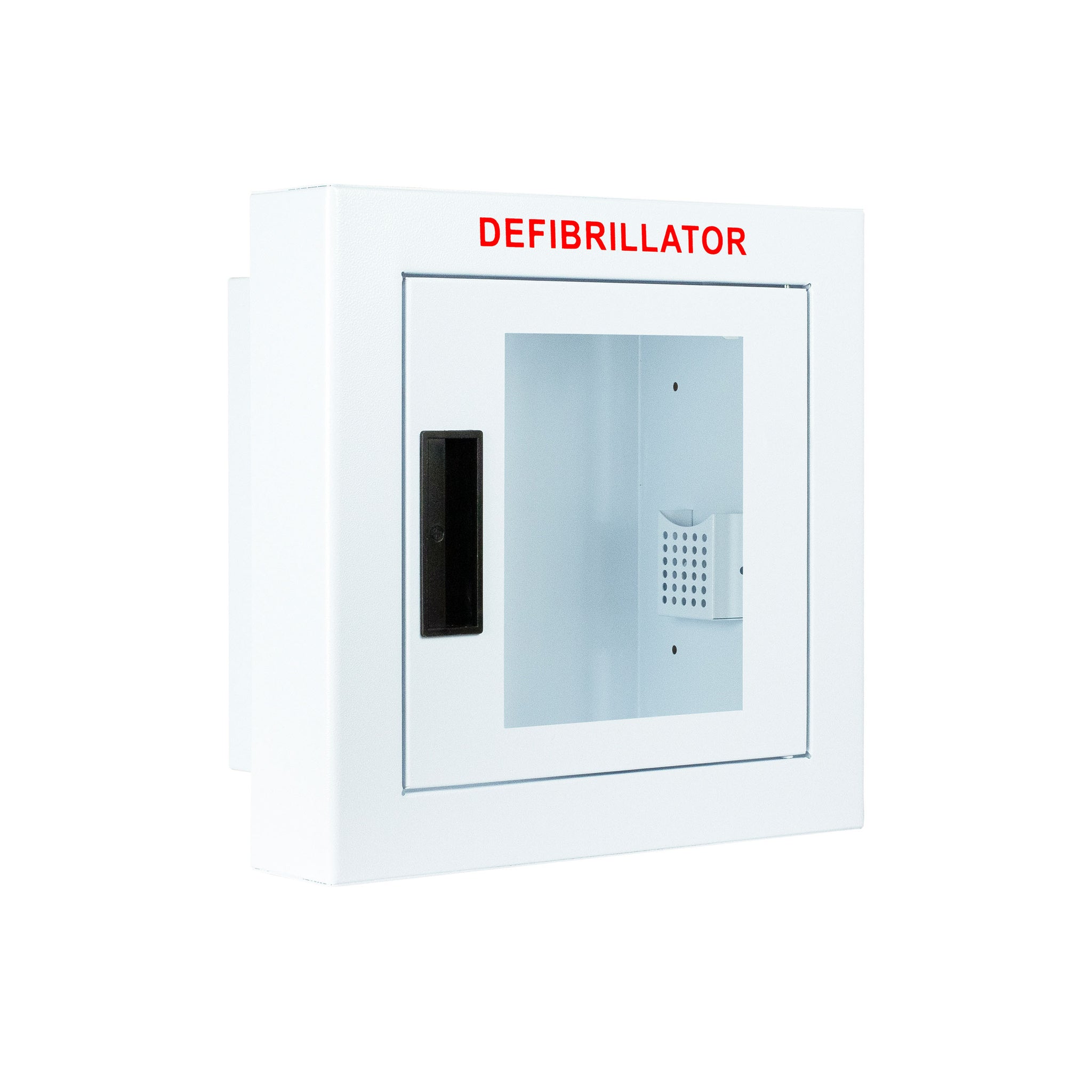
Cubix Safety SR-SN Semi-Recessed Compact AED Cabinet – Low-Profile Institutional AED Storage
Factory Direct Ships 2-3 Days! (Estimated) View Product
You may also like:
Cubix Safety CB2-BC-S Basic Compact Bleeding Control Alarmed Wall Cabinet with Window
Factory Direct Ships 2-3 Days! (Estimated) View Product

You may also like:
Cubix Safety KC-S Compact Kit Cabinet with Alarm
Factory Direct Ships 2-3 Days! (Estimated) View Product

You may also like:
Cubix Safety KC-SS Small Kit Storage Cabinet with Alarm and Strobe
Factory Direct Ships 2-3 Days! (Estimated) View Product

You may also like:
Cubix Safety CB2-BC-LN Standard Large Bleeding Control Cabinet
Factory Direct Ships 2-3 Days! (Estimated) View Product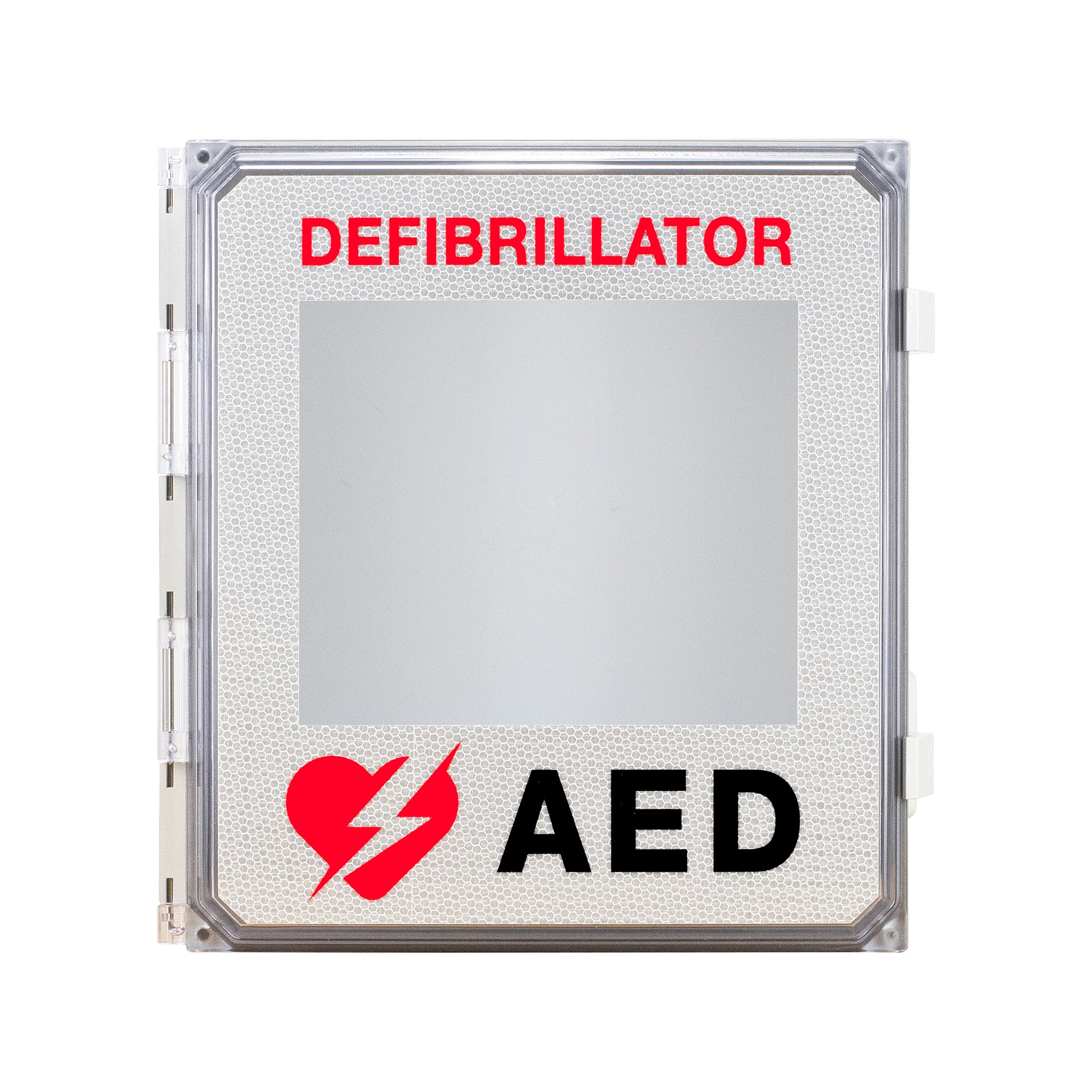
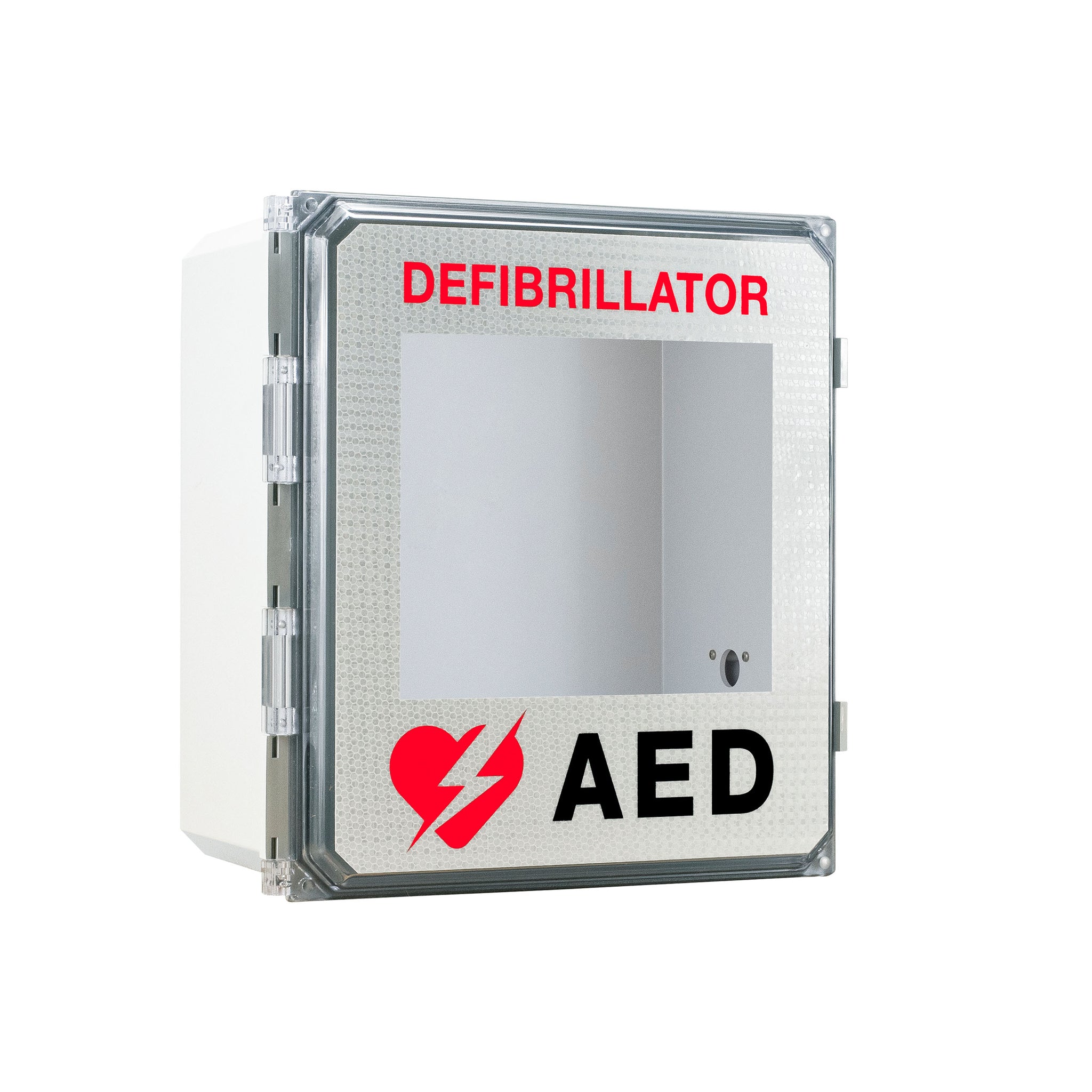
You may also like:
Cubix Safety OWC-N Outdoor AED Non-Alarmed Cabinet
Factory Direct Ships 2-3 Days! (Estimated) View Product

You may also like:
Cubix Safety SR-LN Semi-Recessed Large AED Cabinet | Non-Alarmed Steel Wall Mount
Factory Direct Ships 2-3 Days! (Estimated) View Product

You may also like:
Cubix Safety FR-SN CubiX Safety Fully Recessed Compact Cabinet (No Alarm)
Factory Direct Ships 2-3 Days! (Estimated) View Product

You may also like:
Cubix Safety CB3-Ss Compact AED Wall Cabinet / Alarm and Strobe with View Window
Factory Direct Ships 2-3 Days! (Estimated) View Product

You may also like:
Cubix Safety CB3-Ls Large AED Wall Cabinet / Alarmed Storage with Strobe and View Window
Factory Direct Ships 2-3 Days! (Estimated) View ProductFrequently Asked Questions
Find answers to commonly asked questions below.
-
Do AEDs need to be stored in a cabinet?
Not every AED is required to be in one, and requirements vary by setting. A cabinet is still the standard way facilities store an AED because it keeps the device visible, protected and in a known location. Check your AED program and any rules that apply to your building type for specifics.
-
What is an alarmed AED cabinet?
A cabinet fitted with a door-activated siren — on many models 90–120 dB, often paired with a flashing strobe — that sounds when the door opens. It summons help during an emergency and deters tampering and theft at all other times.
-
What size AED cabinet do I need?
Match the cabinet’s interior dimensions to your AED stored in its carry case. A common standard interior is about 17 × 17 × 7 inches and fits most major brands; measure your device in its case first, and call (800) 239-1797 if you are unsure.
-
Can an AED be stored outside?
Yes, in a cabinet designed for outdoor use. Weather-sealed construction protects against rain and dust, and heated models keep the battery and pads within operating temperature in cold climates. A standard indoor cabinet is not built for outdoor exposure.
-
Where should an AED cabinet be placed?
General practice is a visible, unobstructed spot on a normal path of travel, marked with signage, close to the areas the AED serves — many programs target roughly a three-minute retrieval from anywhere in the building. Confirm final placement against your AED program and local requirements.
-
What is the difference between a recessed and a surface-mount AED cabinet?
A surface-mount cabinet attaches to the wall face and projects its full depth into the room. A recessed cabinet installs into the wall cavity so only the door and trim project, and a semi-recessed model projects just a few inches. Recessed styles are popular in hallways, where projection depth can be a concern.
-
Does an AED cabinet need a strobe light?
No — a strobe is an option, not a requirement. It adds a visual alert on top of the audible alarm, which helps in noisy environments and for anyone who cannot hear the siren. Many alarmed cabinets offer alarm-only and alarm-plus-strobe versions.
-
How do I know if a cabinet fits my defibrillator?
Measure your AED in the case it will be stored in — height, width and depth — and compare those numbers with the cabinet’s listed interior dimensions, leaving a little room to grab the case handle. Every cabinet on this page lists its dimensions; if your device is not listed as compatible, contact us and we will check the fit before you order.