








When transitioning a loved one to home care, the right hospital bed is more than just furniture it is a critical tool for recovery. By prioritizing safety, comfort, and functionality, you can create a clinical-grade environment that supports both the patient's independence and the caregiver's physical health.

Essential Features of Homecare Beds
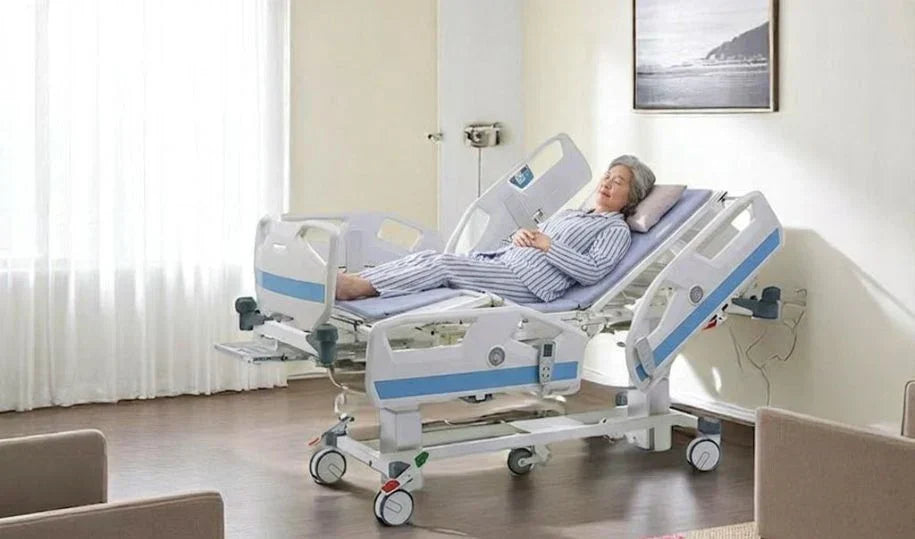
Standard hospital beds offer ergonomic adjustments that traditional home mattresses cannot match. These allow for "Fowler's position" to aid breathing and digestion, and Trendelenburg positions for circulatory issues.
Size & Dimensions
- Standard Width: 36 inches is the industry standard, providing a balance between patient comfort and ease of access for caregivers.
- Standard Length: 80 inches. We recommend 84-inch XL options for patients over 6 feet tall to prevent foot sores.
- Height Range: Most clinical beds adjust from 15" to 24", though "Low Beds" can drop to 7" to mitigate fall injuries.
Choosing Your Model: Manual, Semi-Electric, or Full-Electric
The drive system is the most significant factor in both cost and daily ease of use. While manual beds are a budget-friendly entry point, the physical strain on caregivers often makes electric models the preferred long-term choice.
| Feature | Manual Beds | Semi-Electric | Full-Electric |
|---|---|---|---|
| Head/Foot Adjustment | Hand Cranks | Electric (Remote) | Electric (Remote) |
| Bed Height (Hi-Lo) | Hand Crank | Hand Crank | Electric (Remote) |
| Patient Independence | Minimal | High (Positioning) | Maximum Independence |
| Best For | Short-term Recovery | Value & Comfort | Long-term/Complex Care |
Critical Accessories: The Mattress & Rails
A high-quality bed frame requires a compatible support surface. Traditional "box spring" mattresses are not designed to bend with adjustable frames and can cause equipment failure.
Support Surfaces
- Therapeutic Foam: Features high-density zones for pressure redistribution, essential for preventing Stage I pressure ulcers.
- Innerspring: Provides a familiar feel for mobile patients, typically featuring a waterproof vinyl cover.
- Low Air Loss / Alternating Pressure: Motorized mattresses that circulate air to keep the skin cool and dry critical for bedbound patients.
Safety Rails
Half-Rails act as a stable "grab bar" to assist with repositioning and transfers. Full-Length Rails are intended for safety, though they should be used with caution to avoid "entrapment" risks; ensure they are properly padded if necessary.
Specialized Bed Types
Bariatric Beds: These feature wider decks (42" to 54") and reinforced steel frames to safely support weights ranging from 600 lbs to 1,000 lbs.
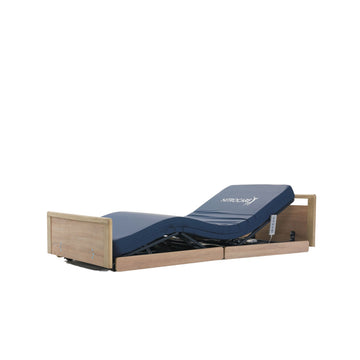
Hi-Low Beds: The gold standard for dementia or fall-risk patients. These beds lower to nearly floor level, significantly reducing the impact force should a patient roll out of bed.

Preparing Your Home for a Hospital Bed
- Clear a Path: Hospital beds are heavy and require a clear 40-inch wide path for delivery and setup.
- Power Access: Ensure a grounded (3-prong) outlet is nearby. Avoid using extension cords, which can be a fire hazard and trip risk.
- Flooring Check: Ensure the floor is level. Most beds include locking casters, but they perform best on hard surfaces or low-pile carpet.
- Specialized Linens: Standard twin sheets are usually too short. Use 36" x 80" hospital-grade fitted sheets to prevent painful skin bunching.
Upgrade Your Home Care Setup
Discover our selection of high-performance electric beds designed for safety, durability, and ease of use.
Shop Electric Hospital Beds