







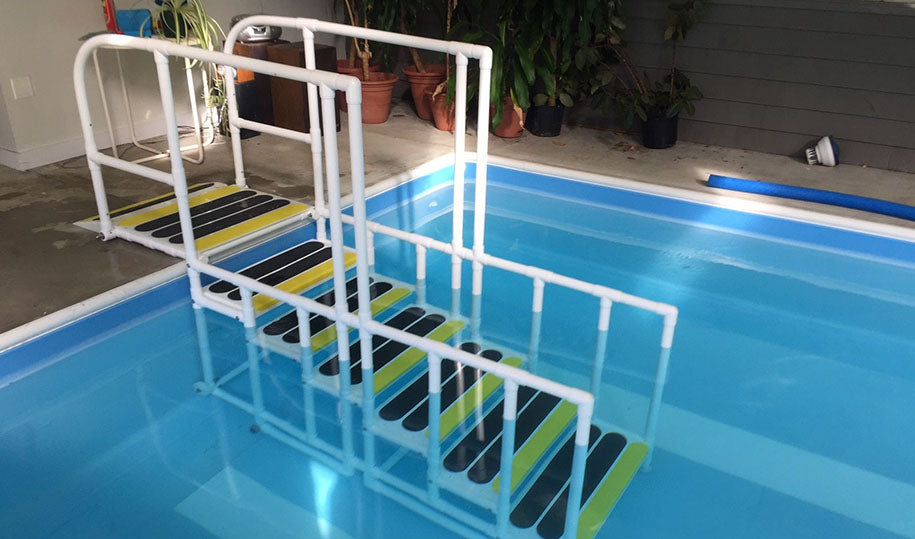
For pool owners, facility managers, and aquatic therapists, the ultimate goal is always the same: creating a safe and inviting environment where everyone can enjoy the water. However, "access" means different things to different people.
For a competitive swimmer, a standard ladder is a minor utility. But for a child learning to swim, a senior recovering from surgery, or a person with mobility challenges, that same ladder can be an insurmountable barrier. In this guide, we break down why modern accessibility platforms are becoming the gold standard for swim instruction and therapy, effectively bridge the gap between "standard access" and true inclusivity.
1. Traditional Pool Ladders: Utility vs. Limitations
Ladders are the most common means of ingress and egress, but they are designed with a specific user in mind: the able-bodied swimmer with high grip strength and balance.
When Ladders Work
- Space-Saving: Small footprint, ideal for deep ends or narrow pool decks.
- Affordability: Generally the most cost-effective exit point for standard residential pools.
- Compliance: When anchored securely according to PHTA guidelines, they provide reliable safety for general users.
Where Ladders Fall Short
- Physical Strain: Requires lifting significant body weight while navigating slippery, vertical rungs.
- Vestibular Challenges: Narrow treads are precarious for seniors or those with inner-ear/balance issues.
- The "Drop-Off" Effect: Ladders offer no transition zone, forcing users to move immediately from a hard surface into deep water.
2. Accessibility Platforms: A Bridge to Confidence
Unlike ladders, accessibility and teaching platforms (often called "swim islands") modify the pool’s floor height. This transformation turns a deep basin into a high-functioning therapeutic tool by creating a "pool within a pool."
- Reduced Perceived Depth: Platforms turn 4 feet of water into 2 feet, instantly reducing anxiety for new swimmers.
- Ergonomic Stability: Wide, non-skid surfaces allow for standing, sitting, or lying down during therapy.
- Independence: Users can move within the water without being constantly held by an instructor, fostering confidence and muscle memory.
3. Leading Solutions for Aquatic Training
Choosing the right platform depends on your facility's specific needs whether that is high-volume swim lessons or specialized medical rehabilitation.
The IPU Swim Island: Dedicated Teaching Hubs
The IPU Teaching Platform is specifically engineered to create a stable "hub" in deeper water. In group settings, this acts as a safety zone where multiple children can wait their turn safely above the water line. Its heavy-duty PVC construction makes it lightweight enough for staff to move but stable enough to prevent shifting during use.
Aqua Creek Swim Training Platform: Versatility in Depth
For pools serving everyone from toddlers to athletes, the Aqua Creek Platform features an adjustable leg system. This customization ensures the water level is exactly where it needs to be for safety, a factor the National Drowning Prevention Alliance (NDPA) cites as vital for effective water orientation and drowning prevention.
IPU Swim Island XLSPI Series: Medical-Grade Support
For hospital rehab or hydrotherapy centers, the XLSPI series offers modular configurations. These models often include integrated handrails on multiple sides, providing a 360-degree sense of security that allows patients to focus on their movements rather than their balance.
4. Safety Standards and Best Practices
The CDC emphasizes that equipment maintenance is a core pillar of aquatic safety. When integrating platforms into your facility, keep these best practices in mind:
- Check Weight Capacity: Always confirm the platform is rated for the combined weight of instructors and students.
- High-Visibility Contrast: Use platforms with contrasting colors (like blue or orange) to help users distinguish the edge of the platform from the pool floor.
- Entrapment Prevention: Ensure the platform is designed to allow water flow underneath, preventing suction or debris buildup.
- Regular Maintenance: Periodically remove units to clean biofilm and ensure non-slip surfaces remain effective.
Conclusion: Investing in Inclusion
The shift from ladders to accessibility platforms represents a shift in how we view aquatic spaces. We are moving away from the idea that the pool is only for the "fit and fast" and toward the realization that water is a space for healing, learning, and play for everyone.
By choosing high-quality systems like Aqua Creek or IPU, you aren’t just buying equipment you are providing the foundation of confidence for a child and the gift of independence for a patient.