







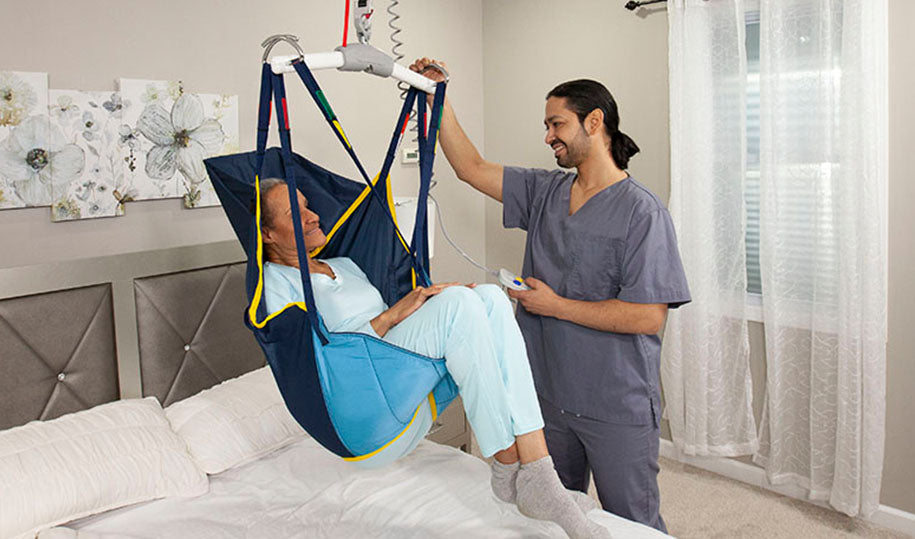
Installing a Handicare lift track system is a sophisticated engineering task. It requires a precise balance between facilitating ergonomic patient handling and maintaining the architectural integrity of your facility. Whether you are retrofitting a private residence or outfitting an acute care environment, adherence to rigorous manufacturer tolerances is non-negotiable for long-term safety.
This guide outlines the technical requirements, hardware specifications, and compliance standards necessary for a successful, high-performance Handicare installation.
1. The Engineering Site Survey: Precision Planning
Success begins long before the first bolt is tightened. A detailed site survey maps the architectural constraints of the space to ensure seamless operation.
- Pick-Up Point Localization: Identify exact transfer points (beds, commodes, baths). Tracks must be perfectly centered to eliminate diagonal loading and prevent premature motor wear and strap fraying.
- Obstruction Analysis: HVAC diffusers, lighting, and fire suppression systems must be mapped to ensure an unobstructed path of travel. Maintain a minimum clearance of 2 inches from all stationary ceiling fixtures.
- Power Access: Dedicated electrical supply should be located within 24 inches of the track end for efficient charging, ensuring the lift remains operational in 24/7 care settings.
2. Structural Load Requirements & Stability
Handicare systems support high Safe Working Loads (SWL), typically from 450 lbs to 1,000 lbs. The structure must sustain these loads plus a mandatory 1.5x safety factor for dynamic testing.
- Wood Framing: Requires attachment to structural joist centers or custom 2x10" (minimum) spanning members to distribute weight across multiple joists.
- Concrete & Steel: Often requires seismic wedge anchors or heavy-duty beam clamps. All concrete anchors must meet minimum embedment depth requirements per local building codes.
- Lateral Stability: X/Y systems must be perfectly level to prevent "crabbing" or carriage binding, which increases the physical effort required by caregivers.
Pro Tip: Consult our Handicare track system components to match fasteners to your specific motor SWL.
3. Selecting the Optimized Track Profile
Choosing the correct profile minimizes the need for excessive brackets and maintains a clean aesthetic. Profiles are selected based on span distance and weight capacity:
| Profile Type | Typical Application | Max Span (625 lb Load) |
|---|---|---|
| Standard Track | Residential / Short Spans | 66" (1.68 m) |
| Super Track | Medium Spans / High Ceilings | 124" (3.15 m) |
| TrackPlus | Long Spans / Bariatric Support | 210" (5.33 m) |
4. Advanced System Configurations
Handicare systems can be customized for comprehensive mobility across any floor plan:
X/Y (H-Frame) Systems
Provide 100% room coverage. The traversing bridge must be precisely calibrated with parallel runways for effortless movement. This configuration is the gold standard for ICU and bariatric rooms.
Transition Gates & Turntables
Connect room-covering systems to linear tracks or allow 45-90 degree directional changes. These require precise mechanical alignment to ensure the trolley passes smoothly without jarring the patient.
5. Technical Best Practices: Fastening & Finishing
- Track Preparation: Aluminum tracks must have exact 90-degree cuts. Edges must be deburred and filed to prevent trolley wheel damage and ensure quiet operation.
- Torque Specs: Bracket Set Screws require Blue Loctite 243 (removable threadlocker) and a torque of 40–45 in-lbs to prevent loosening from system vibration.
- Secondary Safety: All end stops must be secured with a secondary clevis pin—this is a critical safety requirement to prevent accidental trolley roll-off.
The Seamless Solution: Free Professional Assembly
Execution requires specialized tools and certified expertise. To eliminate the risk of structural failure, we include free professional assembly and installation with every Handicare lift track system purchase.
- Structural Review: Certified Handicare technicians verify every attachment point.
- Precision Calibration: Ensuring smooth, level operation for reduced caregiver strain.
- Safety Certification: Mandatory on-site 150% load testing and certificate of completion.
- Turnkey Deployment: Zero risk of costly errors or code compliance issues.
Technical Resources
Ready to design your system?
Get expert guidance and a customized installation quote today.
Build Your Track System & Request Quote