









Managing respiratory health can feel like a full-time job. Whether you are dealing with COPD, asthma, or recovering from a respiratory illness, the right equipment is the difference between feeling restricted and reclaiming your independence. An oxygen concentrator is more than just a medical tool it is a gateway to a better quality of life.

How Does It Work? (Simply Explained)
What is Oxygen Concentration?
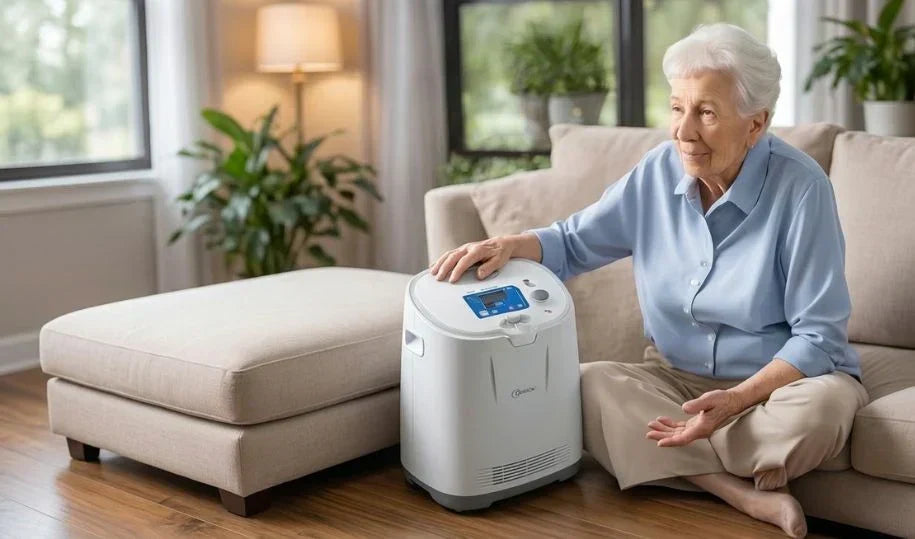
Unlike traditional oxygen tanks that hold a finite amount of gas, an oxygen concentrator is an infinite delivery system. It pulls in the air around you, filters it, and delivers medical-grade oxygen. While the normal air we breathe contains roughly 21% oxygen, a medical concentrator increases that purity to between 90% and 95%. This ensures your bloodstream receives the fuel it needs for energy and healing without overtaxing your lungs.
The Science of Pure Air
The atmosphere is mostly nitrogen (78%). A concentrator uses a compressor and specialized "sieve beds" to trap nitrogen molecules. Once the nitrogen is separated and exhausted back into the room, the remaining high-purity oxygen is delivered directly to you.
The 4-Step Process
- Intake: Draws in ambient room air.
- Filtering: Removes nitrogen and airborne impurities.
- Compression: Concentrates the purified oxygen.
- Delivery: Sends the stream via a cannula or mask.
Choosing Your Model: Portable vs. Stationary
The best unit for you depends on your lifestyle and your doctor's specific prescription for flow rate. Here is the breakdown:

Portable (POC)
Perfect for: Socializing, travel, and active daily errands.
- Ultra-lightweight (many under 10 lbs).
- FAA-approved for use on airplanes.
- Battery-operated with car charging capabilities.
- Uses "Pulse Dose" technology (delivers air only when you inhale).

Stationary
Perfect for: Sleep, heavy home use, and high-flow prescriptions.
- Unlimited power via standard wall outlets.
- Provides "Continuous Flow" oxygen.
- Higher output (typically 5L to 10L per minute).
- Robust, low-maintenance design for 24/7 use.
Maintenance & Safety Tips
To keep your device running efficiently and ensure your home remains safe, follow these three golden rules:
1. Clean the Filters: Dust is the enemy of concentration. Wash your intake filter every week with warm water and mild soap.
2. Oxygen Safety: Oxygen makes materials ignite much more easily. Keep your unit and tubing at least 10 feet away from open flames, gas stoves, or smokers.
3. Monitor Your Levels: Use a pulse oximeter to check your SpO2. A healthy range is usually 95%-100%. If you drop below your target, consult your physician about your settings.
Top-Rated Recommendations
At Rescue Supply, we carry Rhythm Healthcare models due to their quiet operation and reliability.
- Rhythm Healthcare Portable: Compact and powerful for those on the move.
- Rhythm Healthcare P2-E6: Features high-sensitivity sensors for precise pulse delivery.
- Rhythm Healthcare 5L Stationary: The industry "workhorse" for consistent home support.
Take the Next Step Toward Easier Breathing
Choosing the right equipment shouldn't be a matter of guesswork. Consult with your physician to determine your required Liter Flow, then let us help you find the machine that fits your lifestyle.
View Collection & Save Today