







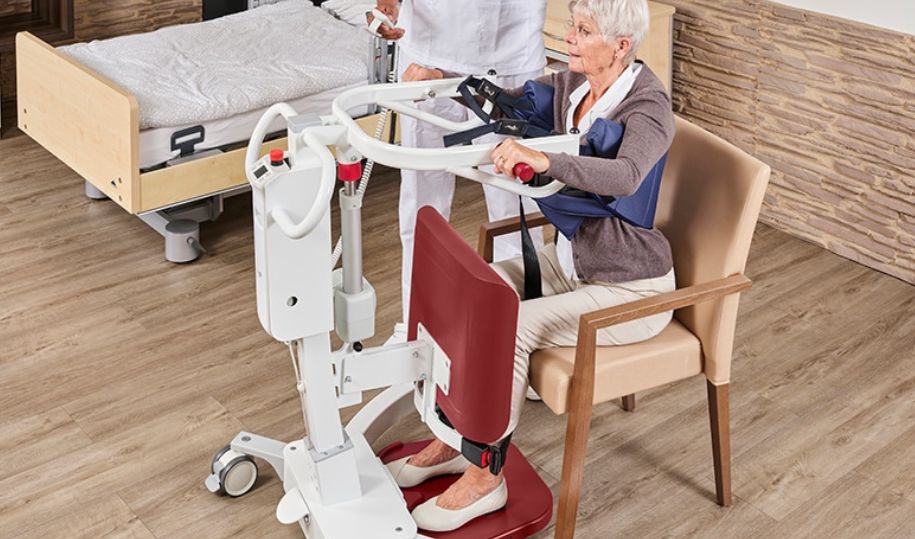
Navigating the world of medical equipment can be overwhelming, especially when lives depend on getting the right terminology. If you’ve been searching for a way to help a loved one or patient transition from sitting to standing, you’ve likely come across the sit-to-stand lift. But is that the only name for it?
The Many Names of Success
While "Sit-to-Stand Lift" is the most descriptive term, this equipment goes by many aliases in hospitals, nursing homes, and private residences. You may see it called:
- Stand-Assist Lift: Perhaps the most common clinical term.
- Active Lift: So-called because the patient must "actively" participate in the lift.
- Standing Hoist: A term frequently used in European and professional medical circles.
- Standing Aid: A broader term for devices that assist in the rising process.
Regardless of the name, the goal is the same: Safe, dignified, and efficient mobility.

Is a Sit-to-Stand Lift Right for You?
It is important to distinguish these from standard Hoyer lifts. A sit-to-stand lift is designed for individuals who have some weight-bearing capacity in their legs and can maintain a sitting position. If the user can follow instructions and assist slightly in the process, these lifts are often preferred over full-body slings because they promote muscle retention and provide a much higher sense of independence.
Why Choose a Stand-Assist Solution?
Using a lift isn't just about moving from Point A to Point B; it's about the quality of care. Here is why thousands of caregivers prefer these devices:
- Bone & Muscle Health: By encouraging a weight-bearing standing position, these lifts help maintain bone density and leg strength.
- Skin Integrity: Proper slings and controlled movement reduce the friction and shearing that often lead to pressure sores.
- Simplified Toileting: Because the lower body is more accessible than in a standard Hoyer sling, these lifts make bathroom transfers much faster and more private.
- Zero-Lift Environment: Protects caregivers from debilitating back injuries by doing 100% of the heavy lifting.

Manual vs. Electric: Finding Your Fit
Hydraulic (Manual)
These units use a hydraulic pump handle. They are incredibly durable, budget-friendly, and perfect for environments where charging a battery isn't always convenient. They offer a "go-anywhere" reliability that many home users love.
Battery Powered (Electric)
The "gold standard" of modern care. With a push-button remote, the lift rises smoothly and quietly. This eliminates any "jerky" movements, providing the most comfortable experience possible for the patient and the easiest operation for the caregiver.
Upgrade Your Caregiving Today
Don't let mobility challenges limit your life or the life of your loved one. Rescue Supply specializes in high-performance lifts that bring safety back to the home.
Questions? We're here to help!
Call: 800-239-1797 | Visit: www.rescue-supply.com