






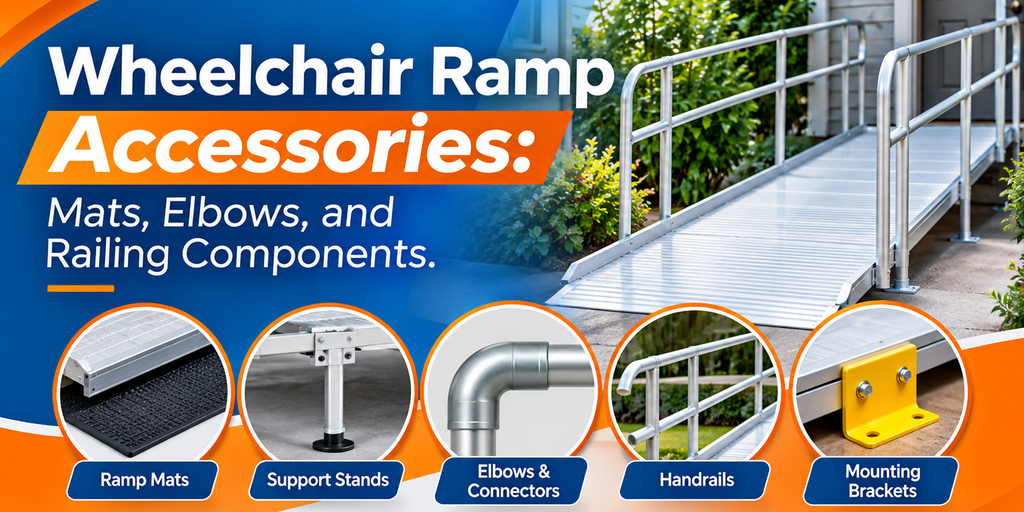
A wheelchair ramp is more than just a sloped surface. Its supporting components, connection hardware, and safety features all contribute to a stable and functional accessibility solution.
Whether you're improving home accessibility, installing a modular wheelchair ramp system, or managing accessibility at a commercial facility, choosing the right wheelchair ramp accessories can make a meaningful difference.
From anti-slip rubber mats and adjustable support stands to handrails, elbows, and mounting brackets, every component serves a specific purpose. Understanding how these accessories work can help you select compatible products and plan a more effective installation.
- How wheelchair ramp mats help support stability.
- When adjustable ramp support stands may be needed.
- How railing elbows and connectors work.
- What to consider when selecting handrails and mounting brackets.
- How to check accessory compatibility before purchasing.
1. Anti-Slip Ramp Mats: Supporting Stability
Ramp mats are designed to provide a protective, high-friction layer beneath compatible ramp sections or support points. They can help reduce unwanted movement between ramp components and the surface beneath them when used as directed by the manufacturer.
For example, the National Ramp Anti-Slip Rubber Ramp Mat is designed to help prevent ramp systems and their legs from shifting or sliding.

Anti-slip ramp mat positioned beneath a portable ramp support point.
What to Consider Before Purchasing
Material
Look for durable rubber construction appropriate for the intended installation environment.
Dimensions
Check the mat's length and width against your ramp sections and support configuration.
Placement
Confirm where the mat should be positioned according to the ramp manufacturer's instructions.
Surface Conditions
Consider the ground material, moisture exposure, drainage, and surrounding installation conditions.
A ramp mat can help support stability, but it does not replace proper ramp installation, leveling, or structural support. Always follow the manufacturer's installation requirements.
2. Adjustable Support Stands: Reducing Ramp Movement
Longer ramp configurations may require additional support underneath the ramp structure. Adjustable support stands are designed to provide support at selected points and help reduce unwanted movement or flex.
The Roll-A-Ramp Adjustable Support Stands are one example of support accessories available through Rescue Supply.

Adjustable ramp support stand shown in an installation configuration.
How to Choose the Right Support Stand
- Ramp manufacturer and model: Identify the exact system to confirm compatibility.
- Support locations: Review the manufacturer's recommended support points and spacing.
- Height adjustment: Check whether the stand provides the adjustment range needed for your installation.
- Ground conditions: Consider the installation surface and applicable load requirements.
- System compatibility: Confirm that the stand is approved for your existing ramp configuration.
Always follow the ramp manufacturer's support and installation recommendations. Placing additional supports in the wrong locations can create installation problems rather than resolve them.
3. Ramp Elbows and Connectors: Creating Proper Transitions
Elbows and connector components help join compatible railing or structural sections. They are particularly useful when a ramp installation requires directional changes or connections between different components.
A 90-degree commercial railing elbow, for example, can create a directional change in a compatible railing configuration. Other connectors are designed to join ramp sections or establish transitions within a modular ramp system.

Brushed steel elbow fitting for a compatible railing configuration.
What to Check Before Ordering Elbows and Connectors
Tube Diameter
Verify the outside diameter of the tubing to ensure the elbow or connector fits the intended railing.
Material and Finish
Consider the material, finish, and suitability for the installation environment.
Connection Type
Check whether the component uses a compatible fitting, bracket, or connection mechanism.
Angle and Orientation
Determine whether your installation requires a 90-degree elbow or another specific configuration.
Never assume two components will fit together simply because they look similar. Verify measurements, connection types, and manufacturer specifications before placing an order.
4. Handrails and Railing Components: Additional User Support
Handrails provide users with a gripping surface while traveling along a wheelchair ramp. They are an important consideration when planning accessible routes for homes, healthcare facilities, schools, and commercial properties.
Rescue Supply carries compatible railing components, including Roll-A-Ramp Anodized Aluminum Handrails with Straight Ends and National Ramp structural railing tubing.

Aluminum wheelchair ramp entrance illustrating an accessible ramp and handrail configuration.
Important Handrail Selection Considerations
- Length: Measure the ramp run and determine the required handrail length.
- Diameter: Confirm compatibility with the elbows, fittings, and other connecting components.
- Material: Consider durability and suitability for indoor or outdoor installation.
- Configuration: Determine whether straight sections, elbows, extensions, or mounting hardware are needed.
- Clearance: Ensure the finished installation maintains the required clear ramp width.
For applicable accessible routes, the ADA Standards for Accessible Design include requirements relating to ramp slope, width, handrails, and other design elements. Requirements depend on the specific application. Verify the applicable standards and building codes before installation.
5. Mounting Brackets and Other Ramp Hardware
Mounting brackets and hardware help secure compatible ramp components and support specific installation configurations. Choosing the right hardware is essential because different ramp systems and mounting arrangements require different connection methods.

Flush mount bracket shown as part of a wheelchair ramp mounting arrangement.
Common Wheelchair Ramp Hardware
Flush Mount Brackets
Designed for compatible vehicle or landing applications where a particular mounting arrangement is required.
Seg-Mount Brackets
Used with compatible modular ramp configurations to support specific component connections.
Connector Brackets
Help join compatible ramp components as part of an approved system configuration.
Pickup Tailgate Brackets
Designed for compatible vehicle ramp installations involving pickup truck tailgates.
Quick-Connect Pins
Used with compatible modular ramp sections to support the intended connection arrangement.
Before ordering mounting hardware, identify the exact ramp model and intended application. Different brackets are designed for different mounting arrangements and are not necessarily interchangeable.
6. A Simple Checklist Before Buying Wheelchair Ramp Accessories
Before purchasing ramp accessories, take a few minutes to review your existing system and installation requirements. This can help prevent incorrect purchases, compatibility problems, and unnecessary installation delays.
-
Identify your ramp system.
Record the manufacturer, model, and current ramp configuration.
-
Measure existing components.
Check tube diameter, ramp width, support height, and connection dimensions.
-
Determine the installation purpose.
Decide whether you need additional stability, handrail support, section connectors, or vehicle mounting hardware.
-
Verify compatibility.
Confirm that the selected accessory is approved for your particular ramp system.
-
Review installation requirements.
Follow manufacturer instructions and applicable accessibility standards and building codes.
-
Consider the environment.
Account for indoor or outdoor use, ground conditions, moisture exposure, and maintenance requirements.
Find the Right Wheelchair Ramp Accessories
Choosing the right accessories is an important part of building and maintaining a functional wheelchair ramp system. Whether you need anti-slip mats, adjustable support stands, handrails, elbows, or mounting hardware, every component should match your ramp's specifications and installation requirements.
Explore the Rescue Supply collection to find wheelchair ramp accessories from National Ramp and Roll-A-Ramp for compatible residential and commercial applications.
Everything You Need to Complete Your Ramp Setup
From anti-slip mats and adjustable support stands to handrails, railing elbows, and mounting hardware, find the accessories you need for your wheelchair ramp system.
Need help finding the right components? Call our team at 800-239-1797