

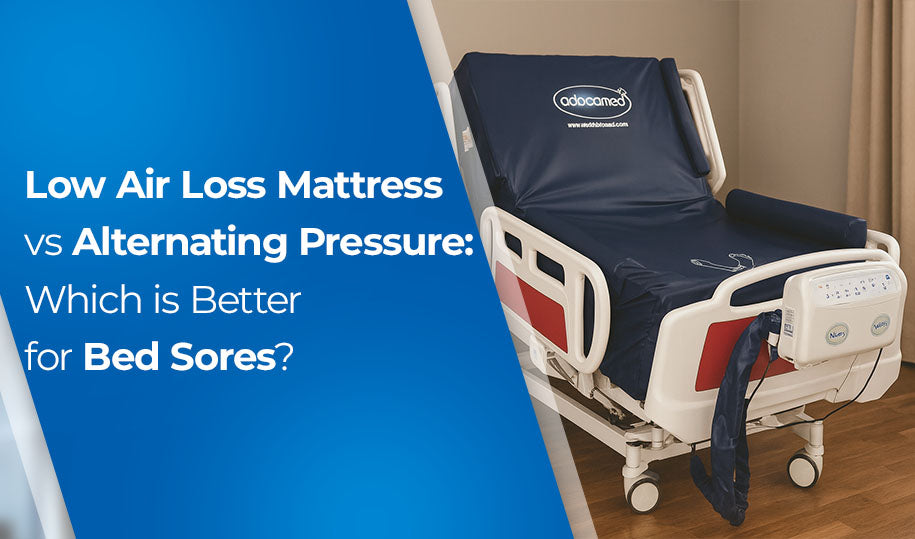
Bed sores, or pressure ulcers, develop when prolonged pressure, friction, or shear damages the skin most often in patients with limited mobility. Poor circulation, moisture, and reduced sensation further increase the risk. The right mattress plays a crucial role in prevention and healing by reducing pressure, managing moisture and temperature, and improving blood flow. Understanding the differences between low air loss and alternating pressure mattresses helps caregivers choose the best support surface for each patientās needs.
Understanding Low Air Loss Mattresses
Low air loss mattresses are designed to promote moisture control and pressure redistribution, making them an effective solution for managing skin health in patients at risk of pressure ulcers. Here's how they work:
Continuous Airflow for Moisture Control
Low air loss mattresses utilize a continuous flow of air that is pushed through microscopic holes on the mattress surface. This constant airflow creates an environment where heat and moisture are efficiently dissipated, promoting superior moisture control. The movement of air helps keep the skin dry and cool, which is critical in preventing moisture-related skin damage such as maceration a common precursor to bed sores.
Pressure Redistribution for Skin Protection
Pressure redistribution is another fundamental feature of low air loss mattresses. These mattresses provide even support by distributing body weight uniformly across the surface. This reduces localized pressure on vulnerable areas like the sacrum, heels, and elbows, where skin breakdown typically begins. The gentle yet consistent support helps minimize tissue ischemia and promotes healthier skin integrity.
Benefits for Specific Patient Needs
Patients who experience excessive sweating, incontinence, or other conditions leading to moisture accumulation benefit greatly from low air loss mattresses. Those with altered pain perception, such as individuals with neuropathy or spinal cord injuries, also find these surfaces advantageous because they reduce the risk of unnoticed skin damage caused by prolonged exposure to moisture and pressure.
Maintenance Considerations
Maintenance considerations include regular inspection and cleaning of the air pump and ensuring that airflow pathways remain unobstructed. Durability varies by model; however, low air loss mattresses generally require more frequent upkeep compared to some other support surfaces due to their complex airflow systems. Proper maintenance safeguards performance and extends mattress lifespan.
Key Benefits
Key benefits of low air loss mattresses include:
- Continuous airflow through surface holes for moisture evaporation.
- Prevention of skin maceration via effective moisture control.
- Uniform pressure redistribution to protect fragile skin areas.
- Suitability for patients with moisture-related risks or sensory impairments.
These features make low air loss mattresses a specialized solution for managing skin health in patients at risk of pressure ulcers caused by moisture buildup alongside pressure.
Understanding Alternating Pressure Mattresses
An alternating pressure mattress consists of multiple interconnected air cells that cyclically inflate and deflate to shift pressure points beneath the body. This dynamic pressure relief system continuously redistributes weight, preventing prolonged pressure on any single area.
Key mechanisms include:
Alternating inflation and deflation cycles - Air cells are programmed to inflate and deflate in sequence, typically every 7 to 15 minutes. This rhythmic change alters contact areas between the body and mattress surface.
Circulation improvement - By regularly changing pressure points, blood flow is stimulated in tissues vulnerable to ischemia. Enhanced circulation supports oxygen delivery and nutrient exchange, critical for tissue health and ulcer prevention.
Pressure relief - The mattress reduces continuous compression, minimizing risks of skin breakdown and progression of pressure ulcers.
Adjustable features allow tailoring cycle times and firmness levels according to individual patient needs or clinical recommendations.
Additional benefits include:
Durability - Constructed with robust materials designed for long-term use, alternating pressure mattresses generally require less frequent maintenance compared to low air loss systems.
Lower maintenance frequency - With fewer components exposed to constant airflow, these mattresses experience reduced wear and are easier to clean.
These qualities make alternating pressure mattresses particularly suitable for patients at high risk due to immobility, such as those confined to bed for extended periods following surgery, stroke, or chronic illness. Patients who require consistent pressure relief without moisture management needs often benefit most from this technology.
The design promotes comfort while supporting clinical goals of ulcer prevention through effective pressure redistribution and enhanced tissue perfusion.
Comparing Benefits and Limitations
A clear mattress comparison between low air loss mattresses and alternating pressure mattresses reveals distinct benefits tailored to patient needs:
1. Moisture Management vs. Circulation Enhancement
Low air loss mattresses excel at maintaining a dry, cool skin environment by continuously ventilating moisture away. This feature is crucial for patients prone to excessive sweating, incontinence, or altered sensory perception.
Alternating pressure mattresses focus on improving blood flow through cyclic inflation and deflation, effectively reducing prolonged pressure on vulnerable tissues, which is vital for immobile patients at high risk of ulcers.
2. Recommended Patient Conditions
Patients with moisture - related skin breakdown or fragile epidermis benefit more from low air loss technology.
Those requiring active pressure relief and enhanced circulation due to immobility or neurological impairments gain greater advantage from alternating pressure surfaces.
3. Comfort and Effectiveness
Both mattress types provide significant comfort improvements over standard foam mattresses by distributing pressure evenly or dynamically.
Low air loss mattresses offer a stable surface that can feel softer due to consistent airflow, while alternating pressure mattresses create rhythmic sensations that some users may find less soothing but highly therapeutic.
Ease of repositioning varies; alternating pressure systems can reduce the frequency of manual turning by shifting weight automatically, whereas low air loss mattresses support easier sliding movements during repositioning.
4. Maintenance and Adjustment Considerations
Low air loss mattresses generally require more frequent maintenance due to airflow systems and filter replacements. They may be less durable in high-use environments.
Alternating pressure mattresses often feature robust construction with longer lifespans and simpler upkeep but need occasional cycle adjustment to match patient comfort and clinical requirements.
Choosing between these mattress types depends heavily on individual clinical factors, balancing moisture control against active circulation support for optimal skin health management.
Real-World Examples
Example 1 ā Immobile Senior Benefiting from Alternating Pressure Mattress
An elderly individual with severely limited mobility due to age-related conditions found significant relief using an alternating pressure mattress. Prolonged immobility had increased the risk of developing pressure ulcers, especially over bony prominences like the sacrum and heels. The mattressās cyclic inflation and deflation promoted enhanced blood flow by regularly shifting pressure points. This dynamic pressure redistribution minimized tissue ischemia and supported skin integrity. Caregivers noted improved comfort levels and a reduction in the frequency of manual repositioning needed, easing caregiving demands while enhancing patient well-being.
Example 2 ā Post-Surgery Patient with Moisture-Prone Skin Using Low Air Loss Mattress
A patient recovering from major abdominal surgery experienced excessive sweating and moisture accumulation around surgical dressings, increasing vulnerability to skin breakdown. The low air loss mattress helped maintain a dry, cool surface through constant airflow, preventing maceration and irritation. Even pressure distribution reduced localized stress on sensitive tissues affected by surgery and immobility during recovery. The patient reported greater comfort, less skin redness, and faster healing progression compared to previous experiences with standard foam mattresses.
Home Care Considerations for Mattress Selection
Home use mattresses must balance effectiveness with practicality. Portable alternating pressure pump-and-pad systems offer flexibility for short-term needs or travel but may require more frequent maintenance and noise management. Integrated low air loss mattresses provide consistent moisture control and pressure relief but often involve higher initial costs and space requirements. Family caregivers should evaluate patient-specific conditions such as immobility level, skin moisture issues, and ease of setup when selecting a mattress for home care settings.
Cost and Maintenance Considerations
When choosing between low air loss and alternating pressure mattresses, it is important to consider factors such as initial cost, long-term durability, cleaning and maintenance requirements, and the availability of replacement parts. Evaluating these aspects helps ensure the mattress meets both patient care needs and budget considerations.
Price Differences
Low air loss mattresses typically have a higher upfront cost due to their advanced airflow technology and materials designed for effective moisture management. Alternating pressure mattresses are generally more affordable initially, though prices can vary depending on features such as adjustable cycle settings and the design of the air cells.
Durability and Lifespan
Alternating pressure mattresses generally offer greater durability, with a typical lifespan of 5 to 7 years when properly maintained. Their robust air cells are designed to withstand regular inflation and deflation cycles over time. Low air loss mattresses, on the other hand, may require more frequent servicing or replacement within 3 to 5 years, as the constant airflow can place stress on materials, particularly in high-use environments.
Cleaning and Maintenance
Both mattress types require routine cleaning to maintain hygiene and prevent infections. Low air loss mattresses benefit from regular wipe-downs, with special attention to the breathable surface holes to prevent clogging. Alternating pressure mattresses need periodic inspection of air cells for leaks or tears, along with occasional deep cleaning of the pump system. Overall, maintenance is often easier for alternating pressure systems due to fewer delicate components exposed on the surface.
Replacement Parts Availability
Replacement parts, including pumps, tubing, and individual air cells, are widely available for both mattress types, though availability and cost can vary by brand and model. Costs can be particularly significant for low air loss systems that use specialized components. Performing regular maintenance checks helps identify worn or damaged parts early, minimizing unexpected expenses and extending the overall functionality and lifespan of the mattress.
Caregiver Usability Factors
1. Ease of Setup
The ease of setup differs notably between low air loss mattresses and alternating pressure systems. Low air loss mattresses typically require connecting the pump and ensuring that all air cells are functioning properly, often involving careful calibration to maintain consistent airflow. Alternating pressure mattresses involve attaching multiple air chambers to a control unit that manages inflation and deflation cycles. While setup can be straightforward, understanding and adjusting the cycles is important to ensure optimal therapy.
2. Noise Levels
Noise levels during operation are a key factor in patient comfort. Low air loss pumps produce a steady, gentle hum due to continuous airflow, which some patients may find soothing while others may find distracting depending on their sensitivity. Alternating pressure mattresses, on the other hand, generate intermittent sounds corresponding to their inflation cycles. These rhythmic noises can be louder but are less constant, which may impact light sleepers or noise-sensitive users.
3. Power Requirements
Understanding power requirements is essential for ensuring uninterrupted patient care. Both types of mattresses rely on electric pumps, though alternating pressure mattresses typically consume less energy since their pumps operate in cycles rather than continuously. In environments prone to power outages, backup options such as battery packs or generators are crucial, helping maintain consistent therapy and preventing any disruption to patient support.
4. User-Friendly Interfaces
Modern support surfaces feature highly intuitive interfaces, designed to make caregiving easier and more efficient. Caregivers can effortlessly adjust settings such as pressure intensity, cycle duration, and airflow levels through responsive touchscreen panels and convenient preset modes. These thoughtful controls reduce training time, minimize operational errors, and enhance overall caregiver confidence, ensuring patients receive precise, individualized care with ease.
Safety Reminders and Professional Guidance
Engaging in healthcare consultation is essential before selecting or switching between low air loss and alternating pressure mattresses. Each patient's condition requires tailored support surfaces to effectively prevent or treat bed sores.
Key signs of bed sores to monitor include:
- Persistent redness or discoloration on bony areas
- Swelling, warmth, or tenderness around pressure points
- Open wounds or ulcerations with possible drainage
- Changes in skin texture such as hardness or softness
Early detection through diligent patient monitoring can significantly reduce progression to severe ulcers. Caregivers should perform routine skin assessments at least once daily, paying close attention to high-risk zones like heels, sacrum, and elbows.
āPrompt identification of skin breakdown allows timely interventionāadjusting mattress settings, repositioning schedules, or seeking medical treatment.ā
Professional guidance ensures the chosen mattress aligns with the patientās evolving needs and supports optimal skin integrity. Regular communication with healthcare providers fosters proactive management and reduces complications related to pressure injuries.
Brand-Neutral Product Note
When selecting medical support surfaces, it is important to recognize that various manufacturers offer low air loss and alternating pressure mattresses with a wide range of features. Differences in materials, airflow technology, cycle options, and control systems can influence the mattressās performance and user experience.
Focus on evaluating mattress features that directly address the patient's specific conditions rather than brand reputation alone. Key considerations include:
- Pressure redistribution capabilities
- Moisture management effectiveness
- Ease of maintenance and cleaning
- Customization options for cycle timing or airflow intensity
Clinical needs and patient comfort should guide purchase decisions to ensure optimal prevention or treatment of bed sores. Consulting with healthcare providers helps align mattress selection with individualized care plans. This approach supports achieving the best therapeutic outcomes regardless of the brand chosen.
Conclusion
Choosing the right support surface is crucial for preventing bed sores and ensuring patient comfort. Here are the key points to consider when recommending a mattress:
Low air loss mattresses - are great for managing moisture by keeping the skin dry and cool. They are ideal for patients who are prone to skin maceration or have moisture-related issues.
Alternating pressure mattresses - work by shifting pressure at specific intervals, which helps improve blood circulation. These mattresses are beneficial for individuals who are at high risk due to being immobile or having impaired tissue blood flow.
Each type of mattress addresses different factors that contribute to skin breakdown. This highlights the importance of selecting a mattress based on the specific needs of each patient.
It's important to consult with healthcare providers to ensure that the mattress choice is compatible with the patient's medical conditions, mobility levels, and skin health status. Professional guidance will help make personalized decisions that optimize healing and prevention strategies for managing bed sores.
When comparing low air loss mattresses and alternating pressure mattresses, it's important to note that they serve different purposes instead of being a one-size-fits-all solution. To achieve the best outcomes, prioritize assessments that are specific to each patient.
"


