






Strategic Life-Safety Brief: The Swisher ESP Safety Shelter is an above-ground residential safe room engineered to provide "near-absolute protection" from EF5 tornadoes. This guide evaluates the technical specifications and NSSA-certified safety standards of the ESP 6-Person capacity system.
Engineering the Swisher ESP Safety Shelter
When selecting a storm shelter, structural integrity is non-negotiable. The Swisher ESP (Emergency – Security – Preparedness) Safety Shelter has undergone rigorous testing at the National Wind Institute at Texas Tech University. To ensure family safety during catastrophic events, the ESP Shelter withstood 9 impacts from 15 lb 2x4’s traveling at 100 mph forces equivalent to an EF5 tornado with 250 mph winds.
Beyond weather protection, the ESP serves as a multi-purpose Panic Room and high-security vault for valuables. Built from 3/16” (0.188”) thick carbon steel with Grade 5 hardware, it offers a fortified zone against both natural disasters and home invasions.
The Proprietary Sliding Door Advantage
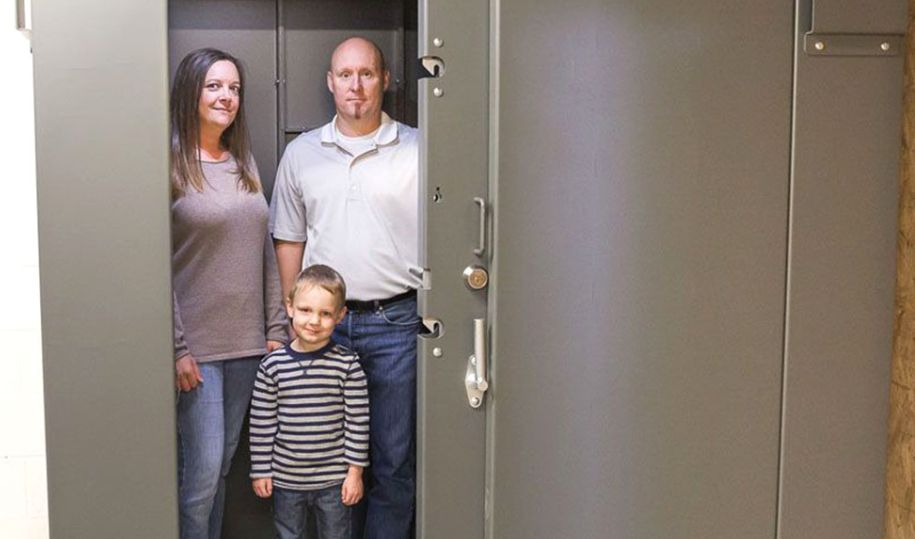
One of the most critical failure points in shelter design is the door. The Swisher ESP features a unique sliding reinforced steel door that eliminates the common risks of inward or outward swinging models.
- Zero-Footprint Operation: The door requires no additional space inside or outside to function.
- Anti-Trapping Design: Because the door does not swing outward, the risk of being trapped inside by exterior debris is virtually eliminated.
- Single-Handle Locking: A single motion engages three steel pins into a 3” deep jamb pocket, saving precious seconds during an emergency.
- Secondary Interior Security: A 4th locking pin can only be operated from the inside, ensuring the door remains sealed even if the external lock is compromised.
Technical Features & Customization
The Swisher ESP is designed for versatility and long-term durability. Most surfaces are powder-coated for a professional appearance and resistance to the elements. Its modular bolt-together design allows for easier construction and the ability to relocate the unit if you move homes.
- 6-Person Capacity: Optimized for residential family use.
- Shielded Ventilation: Allows for uninterrupted airflow while maintaining a debris-proof barrier.
- Rapid Exit: Includes emergency panels and a dedicated wrench for alternative egress if the primary path is blocked.
- Interior Options: Compatible with built-in gun racks, benches, shelving, and emergency kits.
Safety Compliance Information
Every Swisher ESP Safety Shelter is verified to meet or exceed FEMA P320/P361 and ICC-500 Code requirements. Designed by Registered Structural Engineers and subjected to a rigorous Third-Party Review, these American-made shelters offer the ultimate "safe zone" when every minute counts.
Conclusion: Investing in Near-Absolute Protection
Choosing the right storm shelter isn't just about meeting a building code; it's about the "near-absolute protection" of your family. The Swisher ESP 6-Person Safety Shelter bridges the gap between a standard storm room and a high-security vault. By utilizing 3/16" carbon steel and a unique sliding door mechanism that prevents debris-entrapment, Swisher has created a solution that addresses both the violent forces of nature and the security threats of man.
In a high-velocity wind event, the engineering of your shelter is the only thing standing between catastrophe and survival. With NSSA verification and FEMA-compliant construction, the ESP series provides the peace of mind that comes from professional-grade preparedness.
Ready to Protect Your Home?
Don't wait for the next storm warning to secure your loved ones. The Swisher ESP offers the reliability, durability, and safety standards required for modern disaster mitigation.
Shop the Swisher ESP Collection