






Every day, healthcare workers and family caregivers face the physical demand of assisting individuals with mobility challenges. Without automated mechanical support, even routine transfers between beds, wheelchairs, and bathrooms can result in severe injuries, caregiver burnout, and prolonged rehabilitation periods.
5 Common Transfer Mistakes & How Ceiling Lifts Fix Them
1. Relying on Manual Lifting and Physical Force
Attempting to manually lift, reposition, or pivot a patient places immense physical stress on the caregiver's lower back, shoulders, and knees. Even with multi-caregiver teams, sudden movements, loss of grip, or unexpected patient slips can cause immediate spinal injury and muscle strain.
2. Incorrect Sling Selection and Placement
Using the wrong sling style or misaligning support straps creates localized pressure points and unsafe weight distribution. A sling that is too large allows patients to slide out, while one that is too small causes painful pinching and dangerous friction injuries.
- Misaligned Spine: Spinal twisting leads to discomfort and poor body positioning during transit.
- Sling Slippage: Unstable placement increases fear, agitation, and panic for the patient.
- Skin Tears: Shear force and pressure concentrations cause skin breakdown in vulnerable patients.
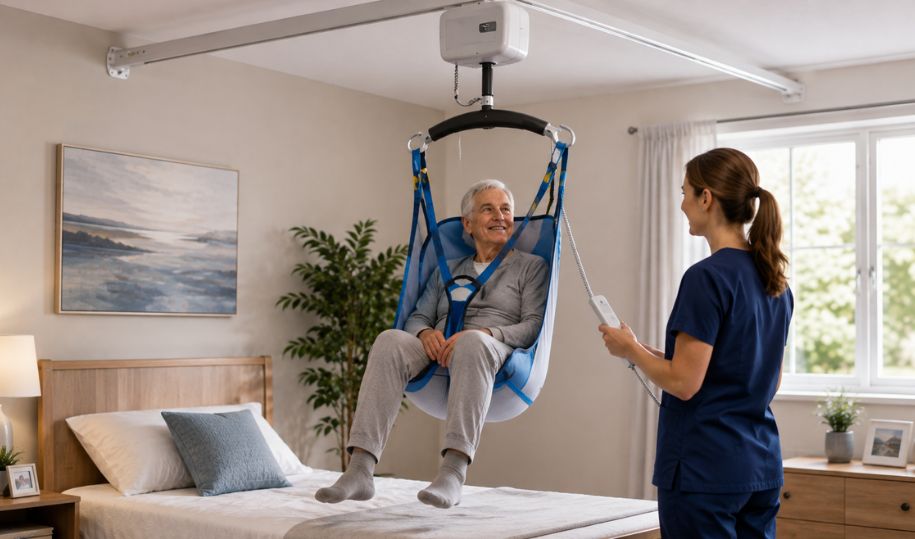
Modern ceiling lift systems pair seamlessly with color-coded, anatomically contoured patient transfer slings. These systems allow caregivers to easily identify proper attachment loops, ensuring balanced, secure positioning and custom fit adjustments before lifting begins.
3. Skipping Pre-Transfer Environment Inspections
Rushing into a transfer without clearing obstacles or locking wheel locks on beds and wheelchairs is a primary cause of accidental falls. Traditional floor-based rolling lifts often get caught on rug edges, tight doorway thresholds, or loose cables, causing dangerous tipping risks.
4. Rushing the Process Without Clear Communication
Patient transfers can be emotionally intimidating. Moving someone without explaining the step-by-step motion creates panic, causing patients to grab caregivers, strain their muscles, or resist movement, which destabilizes manual lifts.
Because ceiling lifts provide smooth, motor-driven lifting speed and consistent, predictable movement, caregivers can maintain full eye contact and maintain continuous verbal reassurance throughout the entire transfer procedure, instilling trust and calm.
5. Neglecting Regular Maintenance and Inspection Checks
Failing to inspect lifting straps, carabiners, and track connections for wear can result in sudden mechanical failure. Ensuring caregiver and patient safety requires systematic pre-use checks on all patient handling equipment.
- Daily visual checks: Inspect fabric webbing and stitching for fraying, stress marks, or damage.
- Track maintenance: Keep ceiling channels free of dust, debris, or blockages for seamless gliding.
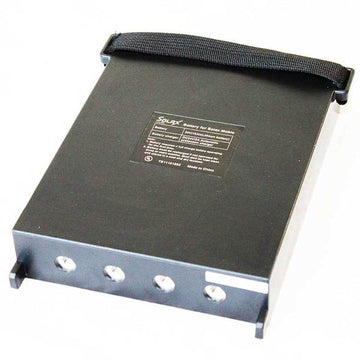
- Battery management: Maintain complete charging schedules to ensure full motor power for heavy-duty transfers.
Comparison: Floor Lifts vs. Ceiling Lift Systems
| Feature | Floor Lifts | Ceiling Lift Systems |
|---|---|---|
| Required Floor Space | Large turning radius required | Zero floor footprint |
| Physical Effort Required | Moderate (Pushing/pulling heavy base) | Minimal (Smooth overhead glide) |
| Transfer Speed & Safety | Slower setup, potential tipping risk | Fast, ultra-stable track guidance |
Thinking about making the switch? Our Ceiling Lift Guide covers layouts, capacities, and installation.