







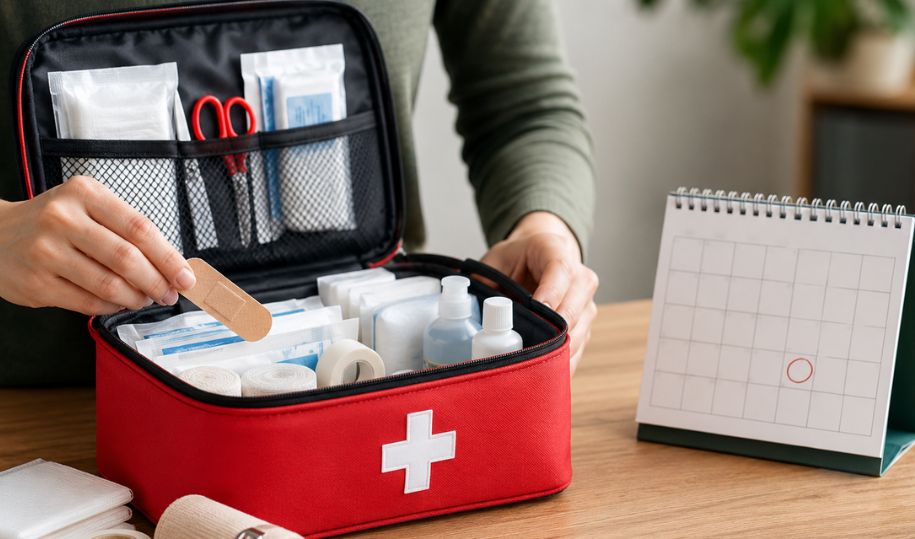
OSHA First Aid Requirements: Understanding General Industry Standards
Under OSHA Standard 29 CFR 1910.151(b), employers are required to ensure that adequate medical and first aid supplies are readily available for employees in every workplace where medical facilities are not in close physical proximity.
To give businesses actionable guidance, OSHA references the consensus standard ANSI/ISEA Z308.1-2021, which sets the mandatory baseline for workplace first aid minimum supplies, container types, and placement logic.
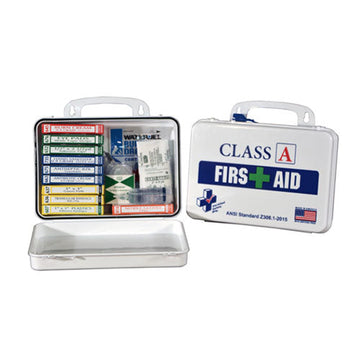
Class A First Aid Kits (Basic Risks)
Designed for low-hazard environments like corporate offices, professional suites, and small retail spaces.
- Coverage: Basic cuts, minor burns, and minor eye irritations.
- Required Fill: 16 adhesive bandages, adhesive tape, antibiotic applications, burn treatments, CPR face shield, eye wash, and cold packs.
Class B First Aid Kits (High Risks)
Designed for complex, high-risk or high-density environments like manufacturing plants, warehouses, and construction sites.
- Coverage: Broader assortment and higher supply volume for high-risk hazards.
- Mandatory Additions: Includes everything in Class A plus a padded splint, dedicated tourniquet, and expanded trauma pads.
Beyond content selection, OSHA compliance requires kits to be readily accessible (typically defined as reachable within 3 to 4 minutes during an emergency) and protected in appropriate enclosures (Type I–IV containers ranging from indoor wall-mounted cabinets to weatherproof, impact-resistant outdoor portable cases).
Managing Commercial or High-Capacity Workplaces?
Large facilities depend on high-capacity solutions like a bulk first aid kit or a 200-person first aid cabinet to remain fully compliant with ANSI/OSHA Class B standards. Don't let missing supplies lead to compliance fines or delayed trauma care.
Different operational environments demand targeted setups. While specialized options like a veterinarian-approved pet first aid kit prepare animal care facilities for domestic animal injuries, high-capacity trauma kits provide critical care tools for multi-person emergency situations.
Understanding the Lifespan & Expiration of First Aid Supplies
Knowing the shelf life of first aid supplies is essential whether you maintain a stationary corporate cabinet, a hiking kit, a survival setup, a tactical kit, or a portable field unit like the Kemp USA 10 Person First Aid Kit.
| Supply Category | Estimated Shelf Life | Key Maintenance Consideration |
|---|---|---|
| Alcohol & Antiseptic Wipes | ~2 Years | Dries out over time as alcohol evaporates, losing sterilizing capability. |
| Antibiotic Ointments | ~2 Years | Loses active potency over time, increasing infection risk on minor wounds. |
| Burn Ointments & Gel Dressings | 1–2 Years | Active ingredients degrade; requires routine replacement for pain relief. |
| Sterile Eyewash Solutions | Up to 3 Years | Must remain sealed; discard immediately if broken, cloudy, or past expiration date. |
| Adhesives & Bandages | 2–4 Years | Adhesive backing breaks down; check for lost stickiness and peeling tape. |
| Nitrile / Latex Medical Gloves | 3–5 Years | Becomes brittle and tears easily when exposed to age, heat, or ambient light. |
Durable non-chemical tools like shears, tweezers, and CPR face shields do not carry strict expiration dates, but must undergo regular physical inspections. Sterile gauze packaging must remain intact, and metal tools must stay clean and rust-free.
When managing larger fleet vehicles or commercial stations—such as the Kemp USA 35 Person First Aid Kit or specialized EMT first aid kits—routine inventory schedules prevent depleted or expired items from causing compliance failures during inspections.
When and How to Inspect Your Workplace Kit Like a Pro
Keeping workplace emergency items compliant requires a structured auditing protocol. Following a regular inspection schedule ensures your emergency kit performs when seconds count.
1Recommended Inspection Schedule
Monthly Audits (OSHA Best Practice): Inspect facility first aid stations monthly to ensure all depleted items are replenished.
Quarterly Review: Mobile vehicle units, high-temperature job sites, and outdoor kits need frequent monitoring due to accelerated degradation.
2Audit Checklist
- Expiration Dates: Inspect all topical creams, wipes, eyewash, and burn gels.
- Sterile Seals: Check for torn or punctured wrappers on sterile gauze pads.
- Physical Damage: Look for cracked bottles, flattened tubes, or corroded cases.
- Stock Levels: Immediately restock items below ANSI Class A or Class B minimums.
Specialized Compliance Needs by Industry
- OSHA-Compliant Workplaces: Confirm contents align strictly with ANSI Z308.1 Class A or B requirements.
- Restaurant First Aid Kits: Prioritize blue detectable bandages, burn treatment gels, and sterile gloves.
- School & Childcare Facilities: Stock pediatric supplies using specialized modules like a pediatric 3-shelf metal station.
- Sports & Athletic Facilities: Maintain instant cold packs, athletic tape, and compression bandages.
- Pet & Animal Care Facilities: Check pet-safe antiseptics and maintain reference guides like Mayday's Pet First Aid DVD or the Mayday Disaster Response Guide.
Refilling Your First Aid Kit to Maintain OSHA Compliance
Maintaining OSHA compliance doesn't require purchasing an entire cabinet or container every time items expire. Buying ANSI-compliant first aid refill packs is a cost-effective, sustainable strategy that eliminates waste while ensuring full regulatory compliance.
Replenish specific items using pre-curated options like pediatric first aid refills or workplace first aid supplies.
Customizing Kits for Specific Hazard Environments
- Outdoor & High-Risk Field Work: Add extra blister protection, insect sting reliefs, and severe bleeding trauma dressings.
- General Workplaces: Ensure stocked inventories of adhesive bandages, CPR barriers, antiseptics, and burn relief.
- Construction Sites & Heavy Manufacturing: Stock heavy-duty trauma gear including pressure dressings, splints, tourniquets, and burn gel dressings.
Storing Your First Aid Kit for Maximum Lifespan
3 Critical Storage Rules for Compliance
- Avoid Direct Sunlight & UV Rays: UV radiation degrades clear plastic pouches, breaks down glove latex, and spoils medicated ointments.
- Keep in a Cool, Dry Location: High humidity ruins bandage adhesives and creates moisture that can compromise sterile paper packaging.
- Maintain Stable Temperatures: Rapid temperature swings inside vehicle compartments cause internal condensation, shortening shelf life.
Select your storage setup based on accessibility needs. Fixed units work best in structured office environments, while field environments require durable, weather-sealed cases:
- Wall-Mounted Cabinets: Keep contents accessible, organized, and clean in commercial facilities.
- Portable & Waterproof Cases: Essential for outdoor job sites, marine environments, field service vehicles, or emergency kits like honey bucket emergency kits.
6-Step Audit Checklist for Workplace Compliance
Run through this workplace audit list monthly:
- [ ] Verify all wipes, creams, burn gels, and eyewash bottles are within their expiration dates.
- [ ] Inspect examination gloves for brittle texture, dry rot, or torn packaging.
- [ ] Confirm adhesive bandages and medical tapes maintain full stickiness.
- [ ] Inspect trauma shears and tweezers for clean condition and absence of rust.
- [ ] Verify CPR face shields and breathing barriers are intact and uncompromised.
- [ ] Restock depleted items to match ANSI Class A or Class B minimum item counts.
Conclusion: Prioritizing Workplace Preparedness
Staying compliant with OSHA and ANSI standard Z308.1 is about more than just avoiding audit penalties—it's about protecting your team when sudden injuries occur. By keeping a strict monthly audit schedule, monitoring supply expiration dates, and properly storing your medical stations, you guarantee your facility is always prepared for emergencies.
Don't Wait for an Audit or Emergency to Restock
Ensure your facility stays 100% OSHA-compliant and ready for unexpected injuries with our commercial-grade ANSI Class A & Class B refills.