






Selecting the appropriate medical stretcher is vital for ensuring both patient comfort and safety during transport. From high-pressure emergency scenes to routine hospital corridors, the right equipment is the backbone of effective care. In this guide, we explore key considerations for choosing the best stretcher, featuring industry-leading solutions from trusted brands like Nitrocare.
Understanding the Role of Medical Stretchers in Patient Care

Medical stretchers are central to patient handling. Used in emergencies, interdepartmental transfers, and remote evacuations, they serve a dual purpose: supporting the patient’s body and reducing operational risks for the medical team.
- Safe Positioning: Maintains proper body alignment during transit.
- Injury Prevention: Features like spinal immobilization are crucial for trauma cases.
- Rapid Response: High maneuverability allows care teams to act swiftly in critical zones.
Exploring Different Types of Medical Stretchers
Choosing the right equipment begins with understanding the environment. Each stretcher type is engineered for specific challenges, from rugged outdoor rescues to sterile clinical settings.
1. Basket Stretchers (Litter Stretchers)
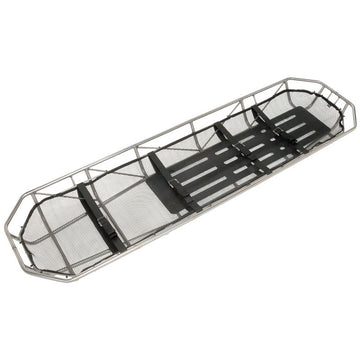
Essential for technical rescues over challenging landscapes. The Junkin Military Type Rectangular Basket Stretcher is a gold standard, featuring stainless steel tubing and a massive 2,500lb load capacity.
Best For: Mountainous areas, confined spaces, and water rescues.

2. Scoop Stretchers (Clamshells)
Designed to minimize spinal movement during initial pickup. The Kemp USA Scoop Stretcher allows responders to "scoop" the patient by splitting the device in half, eliminating the need for a log-roll.
Key Benefit: Superior spinal immobilization for high-risk trauma scenes.

3. Spine Board Stretchers
For maximum rigidity during transit, the PMI Junkin Spine Board offers a lightweight polyethylene build that is easy to clean and highly durable. These are vital for stabilizing limb and spinal fractures in the field.

4. Staircase Stretchers (Stair Chairs)
The Junkin Safety Evacuation Stair Chair is designed for confined spaces such as restaurants, high-rise office buildings, airplanes, boats, narrow hallways, and stairwells.
5. Ambulance & MRI Stretchers
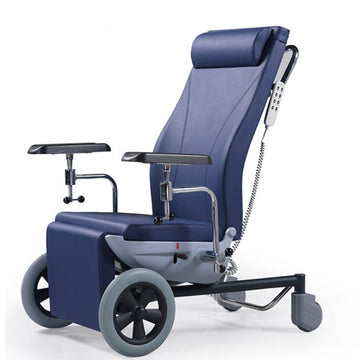
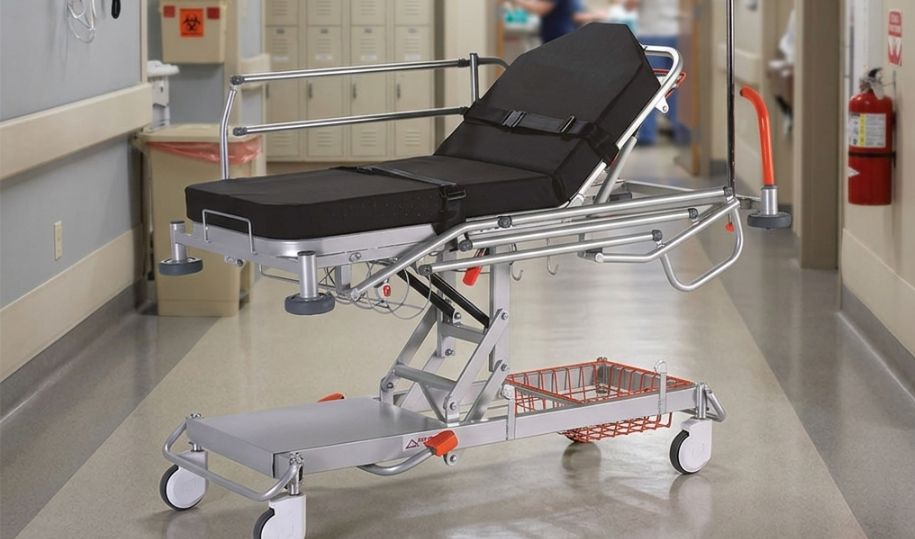
Modern hospitals require versatility. The Nitrocare DRIFT SD17 MRI Stretcher is a high-performance hybrid. It features hydraulic controls for smooth adjustments and is specifically engineered for safe use within sensitive imaging departments.
Critical Safety Factors for Patient Transport
- Patient Restraints: Multi-point straps to prevent falls during movement.
- Stability Mechanisms: Anti-tip wheels and central locking casters.
- Impact Resistance: Reinforced frames designed for long-term clinical durability.
- Maneuverability: 5th-wheel steering systems for precise control in tight corners.
The Nitrocare GLIDE SD09 exemplifies these safety standards, offering a retractable side-rail system and gas-spring lift backrests to reduce caregiver strain.
Selecting the Right Stretcher: A Checklist
| Factor | Requirement |
|---|---|
| Weight Capacity | Must exceed your heaviest anticipated patient. |
| Environment | Is it for MRI rooms, rugged outdoors, or narrow hallways? |
| Sterilization | Look for seamless designs and antimicrobial surfaces. |