






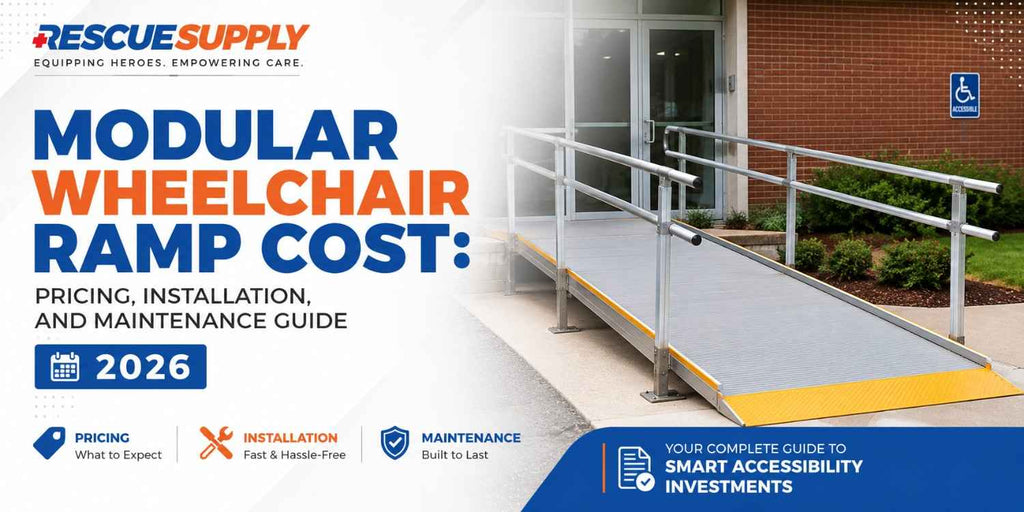
Two questions come up on nearly every call we get about wheelchair ramps: how much does it cost, and how long does it last? The honest answer to both depends on factors most buyers haven't thought about yet - rise height, configuration type, who's installing it, and what the ramp is actually made of.
This guide breaks down the real cost of modular wheelchair ramps in 2026, what installation typically runs, and what ongoing maintenance actually looks like (spoiler: for aluminum systems, it's almost nothing).
What modular wheelchair ramps cost in 2026
The price range for modular wheelchair ramps is wide from a few hundred dollars for a short residential unit to several thousand for a full commercial configuration. Here's what drives that range.
Residential modular ramp pricing
| Configuration | Typical cost |
|---|---|
| Portable folding ramp (2–4 ft) | $150 – $450 |
| Single-run modular system, 6 ft | $500 – $900 |
| Single-run modular system, 10–12 ft | $1,000 – $2,000 |
| Single-run modular system, 16–20 ft | $2,000 – $3,500 |
| Switchback system with landing | $3,000 – $5,500 |
Commercial modular wheelchair ramp pricing
Commercial systems are configured per application — rise height, entrance footprint, and required width all affect the final price. The Rampit USA United Series Commercial modular wheelchair ramp available through Rescue Supply are quoted individually because a 72-inch wide switchback system for a 36-inch rise is a very different product than a straight 48-inch run for a 10-inch threshold.
General commercial pricing ranges:
- 48-inch wide straight run: $3,000 – $6,000 depending on length
- 54 to 60-inch wide configurations: $4,500 – $8,000
- 72 inch switchback with intermediate landing: $7,000 – $15,000+
For volume pricing, institutional quotes, or government procurement through SAM.gov, contact Rescue Supply directly at 800-239-1797.
What affects the price most
Three variables move the price more than anything else:
Rise height - this determines minimum ramp length. Every inch of rise requires at least 12 inches of ramp at the ADA-required 1:12 slope. A 6-inch threshold needs 6 feet of ramp. A 24-inch rise needs at least 24 feet. More ramp means more material, more sections, and more cost.
Width - a 72-inch wide ramp uses roughly twice the material of a 36-inch wide one. For commercial settings, going from 48 to 60 inches is a meaningful cost increase. It pays for itself in usability.
Configuration - straight runs are the simplest and least expensive. L-shaped turns add a landing and more sections. Switchbacks add an intermediate landing and more complexity still. If your entrance footprint forces a switchback, budget accordingly.
Modular wheelchair ramp installation costs
Installation is where buyers often get surprised. The ramp cost and the installation cost are separate. For commercial applications, installation can add $500 to $2,000 depending on complexity and location.
DIY installation
Most modular aluminum wheelchair ramp systems are designed for owner installation. The sections connect using provided hardware, and most manufacturers include an assembly guide. What it actually takes:
- Two people for most configurations
- 2 to 4 hours for a straight single-run system
- 4 to 8 hours for a switchback with multiple landings
- Basic hand tools - no power equipment needed
- No concrete, no excavation, no permit in most jurisdictions
The Rampit USA systems available through Rescue Supply assemble with standard tools and arrive with all hardware included. Made-to-order systems ship in 10 to 15 business days.
Professional installation
Rescue Supply offers access to certified installation professionals in most markets. When it makes sense to pay for professional installation:
- Commercial or institutional applications where a signed compliance certification is needed
- Complex multi-landing configurations
- Facilities with specific liability or insurance requirements
- Any application where getting the slope wrong creates legal exposure
Professional installation typically includes a site assessment, configured installation, and a sign-off document confirming the slope, landing dimensions, and handrail heights meet ADA specifications.
Modular wheelchair ramp maintenance costs
This is where aluminum systems earn their long-term cost advantage. The honest maintenance picture for a quality aluminum modular ramp:
Ongoing maintenance for aluminum ramps
- Annual inspection: check all fasteners and connections for tightness, particularly after the first winter freeze-thaw cycle. Takes about 20 minutes.
- Surface cleaning: rinse with water as needed. No solvents, no coatings required.
- Hardware replacement: over many years, individual bolts or brackets may need replacement. These are standard hardware items.
That's it. No painting, no sealing, no refinishing. The Rampit USA United Series and Independence Series carry lifetime structural warranties because aluminum at commercial grade simply doesn't degrade under normal conditions.
Maintenance comparison by material
| Material | Year 1–5 | Year 5–10 | Year 10–20 |
|---|---|---|---|
| 6005-T5 aluminum | None | None | Hardware check |
| Standard aluminum alloy | None | Surface inspection | Possible surface treatment |
| Galvanized steel | Inspect for rust | Repaint rust areas | Possible section replacement |
| Wood | Annual refinishing | Board replacements | Major refurbishment or replacement |
| Concrete | Crack sealing | Possible resurfacing | Major repairs likely |
For a commercial facility running 10-year cost comparisons, aluminum wins by a significant margin. The upfront premium pays back through eliminated maintenance labor and material costs.
Hidden costs to watch for
A few cost factors that don't show up in the product listing price:
Permit fees - most jurisdictions exempt modular aluminum ramps from building permits, but confirm this with your local building department before ordering. Concrete ramps almost always require a permit, which can cost $200 to $1,000 and add 2 to 6 weeks to the timeline.
Threshold plates and transitions - the connection between the ramp surface and the building threshold needs a beveled transition plate to prevent trip hazards. Some systems include these; others don't. Ask before ordering.
Freight shipping - ramp systems over a certain weight ship via freight rather than standard carrier. For large commercial configurations, freight costs can run $200 to $500 depending on distance and access at the delivery location. Rescue Supply provides freight quotes for institutional buyers within 2 business hours.
Anchoring hardware - for ramps installed on concrete, asphalt, or pavers, the anchoring method matters. Most systems include standard anchors; site-specific conditions sometimes require alternative hardware.
Is a modular wheelchair ramp worth the cost vs. concrete?
For most commercial and residential buyers, yes and the math isn't close when you factor in the full picture.
Poured concrete ramps for a commercial entrance typically run $5,000 to $15,000 or more when you include permits, contractor labor, concrete work, and finishing. They take 4 to 6 weeks from permit application to usable ramp. They're permanent. If the entrance changes, the concrete gets demolished at additional cost. In freeze-thaw climates, concrete cracks and requires ongoing maintenance on top of that.
A commercial modular aluminum wheelchair ramp in the same configuration is installed in a day, requires no permit in most cases, can be reconfigured or relocated if needed, and requires no maintenance for the life of the building.
The only scenario where concrete clearly wins is new construction where the ramp is designed into the building from the start and the entrance will never change. That's a small fraction of the actual commercial ramp market.