






The Occupational Safety and Health Administration (OSHA) plays a critical role in setting and enforcing standards to ensure workplace safety across the United States. One of the most fundamental aspects of a compliant safety program involves having proper, well-stocked first aid kits readily available to handle injuries promptly and effectively.
Whether you manage a corporate office, an industrial site, an active construction zone, or oversee fleet vehicles, maintaining compliance with OSHA’s first aid kit requirements is essential. Failure to do so not only puts your workforce at risk but can result in hefty OSHA citations that cost thousands of dollars.
Why Proper First Aid Kits Matter in the Workplace
- Immediate Injury Mitigation: Rapid access to medical supplies significantly reduces the severity of an injury while waiting for EMS to arrive.
- Employee Health & Productivity: Quick responses protect your workers, boost morale, and keep daily operations running smoothly.
- Regulatory Compliance: Avoid severe OSHA penalties, potential legal liability, and costly operational delays by maintaining up-to-date supplies.
This guide explains OSHA regulation 29 CFR 1910.151(b), which mandates tailored first aid provisions based on specific workplace hazards. You will learn about OSHA’s core expectations, the closely tied ANSI Z308.1 standards, and how to correctly select kits for specialized settings including vehicle, marine, and athletic team environments.
Ensuring complete preparedness in larger facilities can be easily streamlined with centralized, high-capacity solutions like the 150 Person XL Metal Smart Compliance General Business First Aid Cabinet.
Understanding OSHA First Aid Kit Requirements
OSHA’s standard 29 CFR 1910.151(b) establishes that employers must provide adequate first aid supplies that are readily accessible for emergency treatment. Notably, OSHA focuses on availability and hazard suitability rather than dictating rigid, itemized lists or specific brand names.
Additionally, OSHA typically follows a general rule of thumb regarding emergency response: if your workplace is not in near proximity to an infirmary, clinic, or hospital (generally interpreted as a 3 to 4-minute response time for life-threatening injuries), you must have adequately trained personnel and comprehensive first aid supplies on-site.
- Flexible Inventory: OSHA does not mandate fixed contents for generic kits, tactical kits, CPR kits, or trauma setups. Instead, supplies must reflect the risks of the environment.
- Hazard-Matched Supplies: High-risk settings (like heavy construction or manufacturing) require far more advanced trauma care equipment than low-risk office spaces.
- Immediate Accessibility: Supplies must be positioned so employees can reach them instantly during a crisis without encountering locked doors or blocked aisles.
Reference Kit Configurations for Industry Needs
Different environments naturally require targeted equipment profiles:
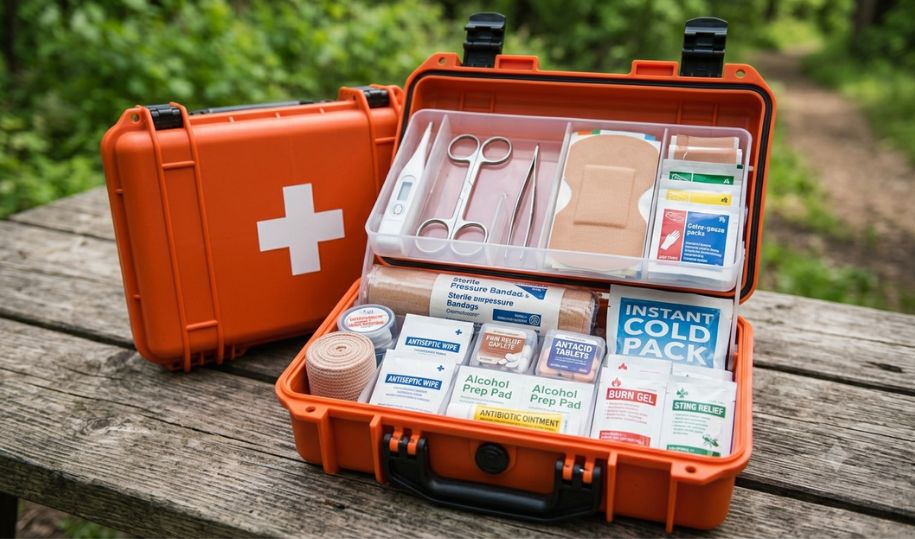
- Outdoor & Travel Kits: Compact configurations focused on basic wound care, minor scrapes, and environmental exposure.
- Tactical & Survival Kits: Advanced trauma kits featuring tourniquets, chest seals, and heavy trauma dressings for severe injuries.
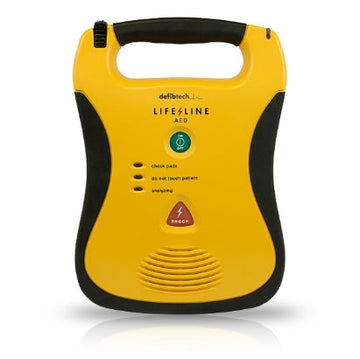
- CPR & EMT Stations: Resuscitation-focused gear, including airway masks, AEDs, and specialized emergency barrier equipment.
For high-capacity facilities, a centralized 4-Shelf OSHA First Aid Station ensures full supply coverage across multiple departments. For field fleets or marine operations, mobile and durable options like Mayday's 25-Person Waterproof OSHA First Aid Kit or their 10-Person OSHA First Aid Kit deliver reliable protection against moisture, dust, and impact.
Higher-risk commercial sites benefit heavily from deploying a 100-Person First Aid Cabinet. Pair your hardware with highly visible signage, like the JJ Keller OSHA Tire Mount Poster Kit, to keep all employees fully aware of safety protocols and kit locations.
ANSI Standards and Their Role in Workplace First Aid
While OSHA enforces the mandate for a safe workplace, they turn to the American National Standards Institute (ANSI Z308.1) as the definitive guide for what modern workplace medical kits should actually contain. Complying with the latest ANSI Z308.1 standards is the most reliable way employers can ensure they meet OSHA's baseline requirements.
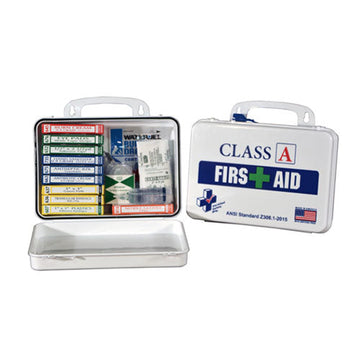
Class A First Aid Kits
Tailored for basic, low-severity workplace injuries.
- Recommended For: Offices, retail storefronts, classrooms, and light commercial spaces.
- Core Contents: Adhesive bandages, antiseptic wipes, sterile gauze, trauma shears, burn cream, and medical-grade gloves.
Class B First Aid Kits
Built for broader, high-risk operational hazards.
- Recommended For: Industrial plants, active construction sites, welding facilities, and heavy-duty warehouses.
- Core Contents: Includes all Class A supplies plus advanced gear like tourniquets, major trauma dressings, padded splints, and a higher volume of standard supplies.
Assessing Workplace Risks to Determine Kit Needs
A comprehensive hazard assessment is the only way to reveal the exact supply requirements for your specific facility. Consider the following breakdown:
- Office Environments: Minor hazards; focus on small cuts, scrapes, and light burns.
- Manufacturing & Industrial: Elevated risks; require heavy burn care, eye flush stations, and severe laceration kits.
- Construction & Job Sites: High trauma risks; require fracture care, severe bleeding control (tourniquets), and impact protection.
- Chemical & Lab Facilities: Specialized hazards; demand extensive eye washes, neutralizing agents, and chemical burn treatments.
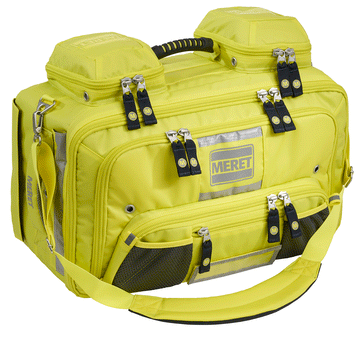
While low-risk sites operate effectively with a standard Class A unit, physically demanding environments require high-volume hardware like a 4-Shelf Industrial First Aid Station. Mobile operators and service fleets should carry dedicated, easily transportable gear like a Responder First Aid and Trauma Kit or compact 10-Person First Aid Kits.
Essential Supplies for an OSHA-Compliant Kit
Standard Baseline Supplies
Advanced & Specialty Supplies
Proper Storage, Accessibility, and Maintenance
A fully stocked first aid kit is useless if it cannot be found or accessed during an emergency. Kits must be placed where emergency care can be rendered immediately.
- Optimal Placement: Mount kits near sinks for hygienic preparation, but keep them away from direct food prep areas. Ensure pathways to the kits remain 100% unblocked at all times.
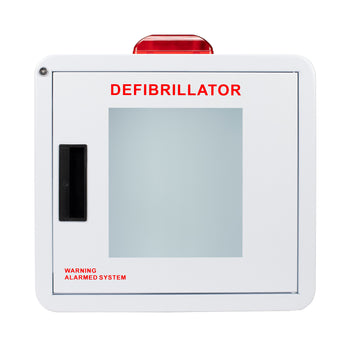
- Storage Options: Choose between heavy-duty wall-mounted cabinets for facilities, compact field kits for vehicles, or rugged waterproof trauma kits for outdoor and marine use.
- Routine Restocking: Appoint a safety officer to inspect supplies monthly. Audit expiration dates on ointments, check sterile packaging seals for damage, and order first aid kit refills immediately after any workplace incident depletes your stock.
Training Employees and Program Development
To truly maximize the impact of your medical equipment, you must implement a structured, ongoing workplace safety program:
- Designate Responders: Train designated first aid officers in CPR, AED usage, and severe wound management. OSHA requires on-site trained personnel if a hospital is not immediately accessible.
- Conduct Regular Drills: Ensure all staff members can locate wall stations quickly and understand how to assist responders.
- Audit & Document: Maintain strict inspection logs of your first aid stations and update your safety program annually as your staff size grows or facility risks evolve.
Keep Your Workplace Safe & 100% OSHA Compliant
Don't wait for a surprise inspection or a workplace emergency. Equip your business with industry-tested, ANSI-compliant first aid stations and trauma supplies today.
Shop OSHA-Compliant First Aid Kits