






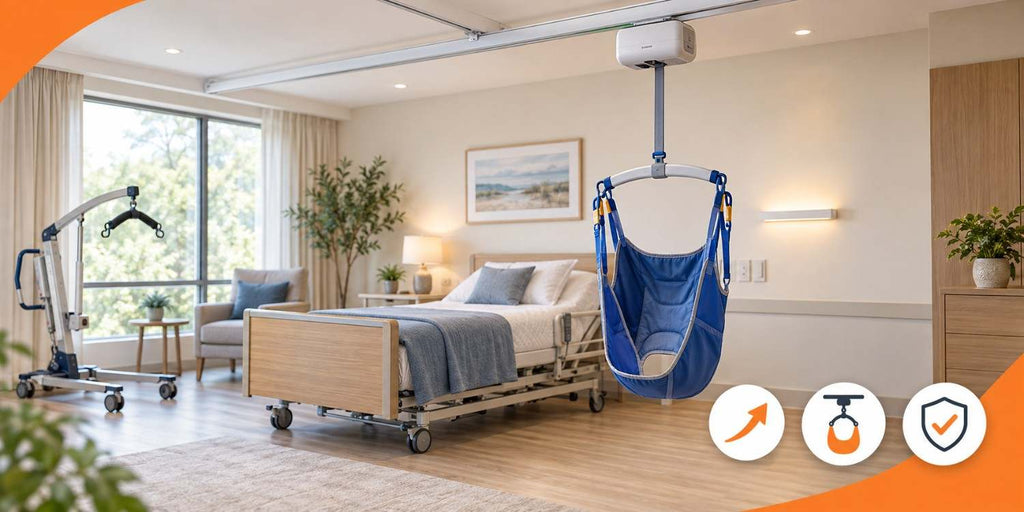
Standard mobile floor lifts serve an important purpose, but they come with physical limitations including bulky frames, floor clutter, and manual maneuvering friction. Upgrading to a dedicated ceiling lift track system transforms room accessibility and simplifies everyday care routines.
5 Unmistakable Signs It Is Time to Upgrade Your Lift
1. Caregivers Report Fatigue or Physical Strain
Even though mobile floor lifts lift body weight mechanically, caregivers still have to push, pull, and turn heavy equipment across carpets, doorway thresholds, and tight spaces. Over time, this repetitive force leads to shoulder, wrist, and lower back strain.
2. Floor Space Is Too Limited or Cluttered
Bedrooms, bathrooms, and acute care spaces are often filled with furniture, medical gear, and wheelchairs. Mobile floor lifts require wide turning radiuses and clear floor pathways to extend their leg bases safely.
- Tight Navigation: Struggling to position a floor lift base under low-clearance beds or around chairs.
- Doorway Bottlenecks: Difficulty wheeling heavy bases through narrow residential doorways.
- Tripping Hazards: Mobile equipment bases create floor clutter in small care environments.
3. Patient Weight Capacity or Mobility Needs Have Increased
As health conditions evolve, patients may require higher weight limits, increased stability, or direct bed-to-bath track transfers. Pushing older or under-rated equipment past its comfortable operating range compromises safety.
Upgrading to modern patient transfer lifts and ceiling track systems provides higher weight capacities (often up to 600+ lbs) and versatile motor capabilities tailored to complex care requirements.
4. Frequent Maintenance and Equipment Downtime
As floor lifts age, mechanical wear, hydraulic leaks, and battery degeneration become frequent issues. Ongoing repair costs and sudden equipment downtime create dangerous disruptions in daily transfer routines.
5. Patient Discomfort or Anxiety During Transfers
Mobile floor lifts can swing or sway slightly as they roll over floor seams or carpets, causing anxiety for the patient. Overhead ceiling tracks deliver a smooth, rigid, linear glide path that feels far more secure and reassuring during transit.
What to Consider Before Upgrading
Track Configuration
Choose between fixed single-track lines for straight transfers (e.g., bed to chair) or H-frame traverse systems that offer full coverage over an entire room.
Sling Compatibility
Ensure your system couples with high-quality patient transfer slings tailored for specific user needs, including padded, mesh, or hygienic styles.