





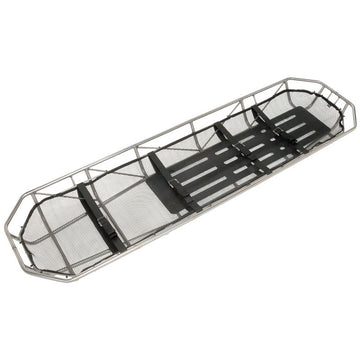
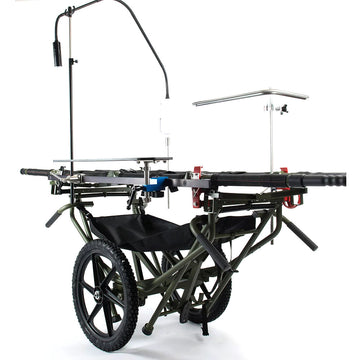

Foldable Stretchers
Prepare your team for urgent response with dependable foldable stretchers designed for compact storage, quick deployment, and efficient patient movement. Whether you are outfitting an EMS kit, facility safety station, workplace emergency plan, or medical response area, the right stretcher helps improve readiness when every second matters.
Our foldable stretchers are built for practical transport support in demanding environments where space, speed, and reliability are critical. Explore options designed for easy carrying, durable construction, secure patient handling, and storage-friendly folding frames. They are ideal for emergency preparedness, evacuation planning, healthcare facilities, industrial sites, schools, and government response programs.
Browse our collection to find foldable stretchers that match your operational needs, storage limits, and response protocols. Equip your team with portable patient transport solutions built for real-world readiness. Shop now and strengthen your emergency response plan today.


You may also like:
Nitrocare Glide SD09: Hydraulic General Duty Patient Transport Stretcher
Factory Direct Ships 2-3 Days! (Estimated) More info

You may also like:
Nitrocare Lilo SD01-P | Specialized Pediatric Transport Stretcher with Full-Length Safety Rails
Factory Direct Ships 2-3 Days! (Estimated) More info

You may also like:
Nitrocare Breeze SD14: Full-Electric Advanced Patient Transport Stretcher
Factory Direct Ships 2-3 Days! (Estimated) More info

You may also like:
Nitrocare DRIFT SD17: MRI Hospital Stretcher MRI-Compatible Patient Transport
Factory Direct Ships 2-3 Days! (Estimated) More info

You may also like:
Nitrocare AZURE SD02: MRI Stretcher MRI-Safe Hydraulic Patient Transport
Factory Direct Ships 2-3 Days! (Estimated) More info

You may also like:
Nitrocare Sigma SD03: Imaging-Compatible C-Arm Hospital Patient Transport and Procedure Stretcher
Factory Direct Ships 2-3 Days! (Estimated) More infoFrequently Asked Questions
Find answers to commonly asked questions below.
-
Do these foldable stretchers meet the compliance needs of professional emergency response and healthcare programs?
Foldable stretchers can support professional emergency response and healthcare programs when the selected model matches the organization’s safety protocols, patient handling requirements, and intended use environment. Procurement teams should verify product documentation, rated load capacity, frame material, restraints, and cleaning requirements before approval. For regulated medical, industrial, or government settings, a folding stretcher should be evaluated as part of the full patient transport plan rather than as a standalone item. Rescue Supply positions folding stretchers for portable emergency transport, including use in confined spaces where rapid deployment matters. Compliance review should also include staff training, inspection schedules, and storage procedures. This helps reduce equipment mismatch, improves readiness, and supports more consistent emergency response operations.
-
How do foldable stretchers integrate into facility evacuation, EMS, and patient transport workflows?
Foldable stretchers integrate well into evacuation plans, EMS response kits, and patient transport workflows because they are designed for compact storage and fast deployment. Facility managers can stage them near emergency exits, security stations, first aid rooms, disaster response caches, or high-risk work areas. Their folding frame design helps conserve storage space while keeping transport equipment accessible when hallways, stairwells, or tight areas limit maneuverability. For EMS and healthcare teams, compatibility with restraints, transfer protocols, and cleaning procedures should be confirmed before deployment. Standard placement and staff orientation are important so teams know where stretchers are stored and how to unfold, secure, and carry them correctly. A well-integrated folding stretcher program improves response speed without requiring permanent equipment in every room or department.
-
What technical specifications should procurement teams compare before purchasing foldable stretchers?
The most important technical specifications are load capacity, folded dimensions, open dimensions, stretcher weight, frame material, handle design, restraints, and surface cleanability. Procurement officers should compare whether the stretcher is intended for emergency evacuation, general patient transfer, confined-space movement, or backup disaster response. A lightweight aluminum frame may improve portability, while reinforced fabric or durable patient surfaces support repeated institutional use. Folded size matters for storage in ambulances, emergency closets, mobile carts, or facility response kits. Buyers should also confirm whether the product supports the patient size range and operational handling needs of their teams. Reviewing these technical specifications before purchase helps prevent downstream issues with storage, training, transport safety, and replacement planning.
-
Are foldable stretchers scalable for multi-site facilities, government agencies, or emergency preparedness programs?
Yes, foldable stretchers can scale across multi-site facilities, agencies, and emergency preparedness programs when buyers standardize models, quantities, and storage locations. Rescue Supply supports institutional buyers with Net 30 terms, freight quotes, volume pricing, and bulk discount requests, which can simplify larger procurement cycles. Standardization helps reduce SKU complexity and makes staff training more consistent across departments or locations. For government, healthcare, education, and industrial environments, buyers should map stretcher quantities to occupancy, response zones, and evacuation risk. Bulk purchasing also allows teams to create consistent inspection and replacement schedules across their equipment inventory. This makes foldable stretchers a practical option for organizations building scalable emergency transport readiness.
-
How should buyers evaluate total cost of ownership when sourcing foldable stretchers in bulk?
Buyers should evaluate total cost of ownership by looking beyond unit price to durability, storage efficiency, training time, freight costs, inspection requirements, and replacement frequency. A low-cost stretcher may not be the best value if it lacks the load capacity, folding mechanism, or cleanable materials required for institutional use. Compact storage can improve ROI by reducing the space needed for emergency transport equipment across multiple departments. Rescue Supply’s quote process includes bulk discounts, freight quote support, and optional professional installation with basic staff orientation, which can reduce procurement friction for larger buyers. Facilities should also consider whether standardizing on one folding stretcher model will lower training and maintenance complexity over time. The strongest ROI comes from selecting a reliable stretcher that supports the response plan, stores efficiently, and remains ready for repeated emergency use.


