







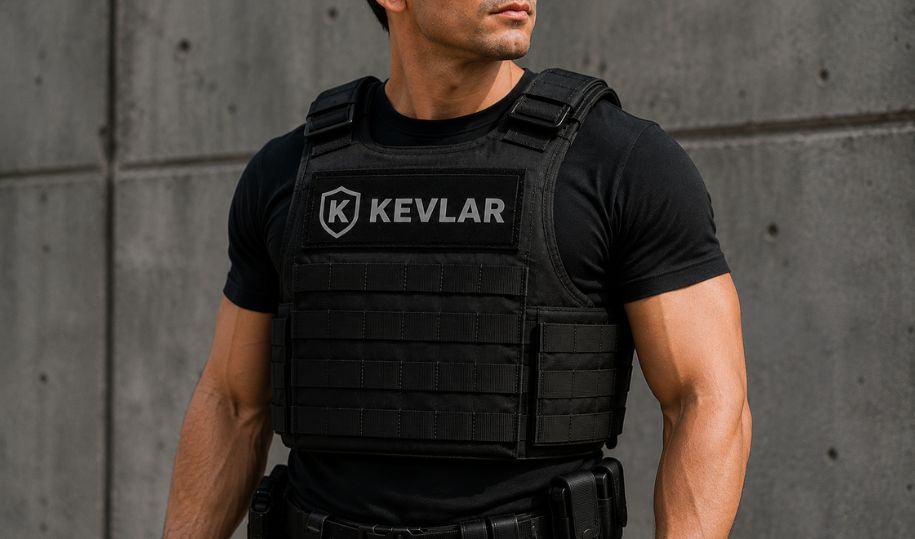
When it comes to personal safety, understanding your gear is paramount. Body armor is one of the most vital investments security professionals, law enforcement officers, and prepared citizens can make. But how exactly does a fabric weave stop a speeding bullet, and how do you know which vest is right for your environment?
In this comprehensive guide, we will break down the science behind Kevlar vests and decode the standard National Institute of Justice (NIJ) protection levels so you can make an informed buying decision.
The Science: How Does Kevlar Stop Bullets?
Kevlar® is a synthetic fiber closely related to other polyamides, boasting an incredible tensile strength-to-weight ratio. Structurally, it is five times stronger than steel on an equal weight basis.
The Net Effect: Think of a Kevlar vest like a soccer net. When a ball strikes the net, the threads absorb and disperse the energy across the entire structure. Kevlar does the exact same thing to kinetic energy from an oncoming projectile, mushrooms the bullet, and catches it within its multi-layered matrix.
By weaving these fibers into dense, tightly interlocking sheets, manufacturers create a barrier that deforms the bullet upon impact, rapidly turning its forward velocity into harmless heat and lateral force. This process reduces the localized impact, protecting the wearer from lethal penetration.
Understanding NIJ Protection Levels
Not all ballistic armor is created equal. The National Institute of Justice (NIJ) sets the global standard for testing body armor. Vests are categorized into distinct levels based on their capability to stop specific types of ammunition and velocities.
Level IIA
Designed to stop lower-velocity handgun rounds. Typically lightweight and ultra-concealable, Level IIA is tested against 9mm FMJ and .40 S&W ammunition. While highly flexible, it offers minimal defense against modern, higher-velocity defensive loads.
Level II
Striking an excellent balance between comfort, concealability, and protection, Level II vests protect against higher-velocity 9mm FMJ and .357 Magnum JSP rounds. It remains a popular, lightweight choice for everyday patrol use.
Level IIIA
The most common standard for soft body armor. Level IIIA Kevlar panels are rated to defeat high-velocity handgun threats, including .44 Magnum SJHP and 357 SIG Flat Nose rounds. This is the optimal recommendation for maximum soft armor protection.
Level III & IV (Hard Armor)
Vests looking to defeat rifle configurations require hard plates inserted alongside Kevlar. Level III stops 7.62mm rifle rounds, while Level IV offers maximum defense against armor-piercing rifle rounds.
Soft Armor vs. Hard Armor: What Do You Need?
Choosing between soft Kevlar panels and rigid hard armor configurations depends completely on your expected threat profile:
- Soft Armor (Levels II & IIIA): Ideal for concealable defense against common handgun threats. Perfect for security personnel, discrete patrol, and everyday carry configurations.
- Hard Armor (Levels III & IV): Built using ceramic, polyethylene, or steel plates. Essential for military, tactical units, and static active-shooter defenses where centerfire rifle rounds are a factor.
Crucial Takeaways for Armor Maintenance
To ensure your armor continues to function exactly when you need it most, follow these essential maintenance protocols:
- Avoid Moisture: Submerging Kevlar panels can compromise the chemical composition of the fibers. Wipe carriers down manually and air dry.
- Store Flat: Do not bunch up or fold your panels, as this creates micro-creases in the woven layers over time, reducing overall integrity.
- Check Expiration Dates: Most soft ballistic materials carry a standard 5-year operational lifespan from the date of manufacture. Regularly audit your loadout.
Ready to outfit yourself or your team with industry-vetted safety gear? View our complete line of tactical loadouts or contact our tactical support staff today to answer your custom sizing and threat configuration questions.
Equip Yourself with Professional Grade Body Armor
Don't leave your physical safety up to guesswork. Browse our collection of NIJ-certified soft Kevlar configurations, tactical carriers, and rugged hard plate systems engineered to defend against modern ballistic threats.
Explore Our Body Armor Collection