







Rollators Walkers
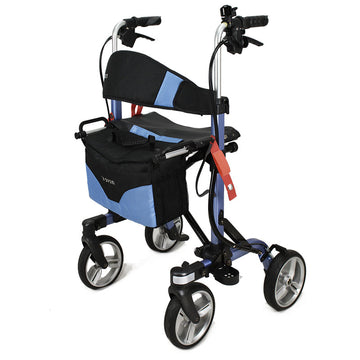
Experience the perfect blend of independence and security with our premium selection of rollators walkers, designed to help you navigate your world with confidence. Unlike traditional walkers, these wheeled mobility aids feature integrated seating and hand brakes, allowing you to stop and rest whenever needed, making them ideal for shopping trips, long walks, or simply moving around your home. Our collection focuses on comfort, convenience, and durability to support an active and secure lifestyle for seniors and those with mobility challenges.
Equipped with sturdy wheels and easy-to-use braking systems, our rollators walkers offer effortless maneuverability across various surfaces, both indoors and out. Many models feature adjustable handle heights for perfect posture, lightweight frames for easy transport in vehicles, and built-in baskets or pouches for carrying personal belongings. By reducing the strain on your joints and improving balance, these high-performance mobility aids allow you to conserve energy and move freely with peace of mind.
Explore our diverse range of advanced walkers and find the perfect model to match your specific needs and personal style. Shop our rollators walkers today and step into a more mobile life.

You may also like:
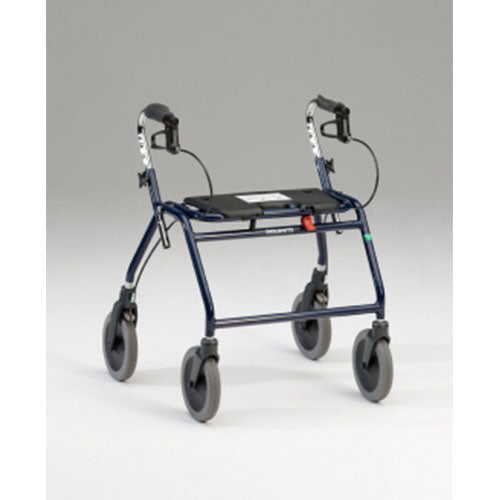
Maxi+Low Heavy Duty 4-Wheeled Dolomite Walker
Factory Direct Ships 2-3 Days! (Estimated) More info
You may also like:
Maxi+ Heavy Duty 4-Wheeled Dolomite Walker
Factory Direct Ships 2-3 Days! (Estimated) More infoFrequently Asked Questions
Find answers to commonly asked questions below.
-
Do your rollators and walkers meet the necessary FDA and ISO standards required for use in clinical or government-managed healthcare facilities?
Our professional-grade rollators and walkers are manufactured in compliance with international ISO 11199-2 standards and are registered as Class I or II medical devices to satisfy strict healthcare procurement regulations. These units are designed to meet the rigorous safety requirements of government and private hospital systems, ensuring that patient safety is never compromised during mobility therapy. Each device undergoes extensive stress testing to verify that its structural integrity remains consistent even under the demands of a high-volume clinical setting. Utilizing certified equipment helps facility managers mitigate liability risks and ensures seamless approval during departmental safety audits. By investing in standardized, compliant hardware, institutional buyers can be confident they are providing a professional level of care that meets modern medical benchmarks.
-
How does standardizing on a specific rollator model across a facility improve operational efficiency and fleet maintenance?
Standardizing a facility’s fleet with a uniform rollator model simplifies staff training and significantly streamlines the procurement of replacement parts like wheels and brake cables. When caregivers are familiar with a single braking mechanism and folding system, the risk of operator error during patient transfers is greatly reduced, enhancing overall safety protocols. From a maintenance perspective, keeping a unified inventory of components reduces downtime, as a single technician can quickly service multiple units without specialized toolsets for different brands. This consistency also allows for predictable storage planning, as standardized dimensions ensure units fit efficiently into designated alcoves or transport vehicles. A cohesive fleet reflects a professional institutional image and ensures that every patient receives an identical, high-quality experience regardless of their location within the building.
-
What factors contribute to a lower total cost of ownership (TCO) when procuring institutional-grade mobility aids compared to consumer retail models?
Institutional-grade mobility aids offer a lower total cost of ownership (TCO) by utilizing reinforced frames and heavy-duty components that far outlast the lifecycles of consumer-level retail products. While the initial capital expenditure may be higher, the reduction in replacement frequency and maintenance labor leads to significant long-term savings for facility budgets. These professional units are built with higher-gauge aluminum or steel, preventing the frame fatigue and joint loosening common in light-duty models. Furthermore, the availability of professional-grade load capacity ratings ensures that the equipment can be safely used across a wider patient demographic without specialized "one-off" purchases. By choosing durable assets designed for the "rigors of the floor," procurement officers can maximize their ROI and minimize the disruptions caused by equipment failure.
-
What technical specifications ensure that these walkers provide sufficient support for bariatric patients while protecting facility flooring?
Our heavy-duty rollators feature reinforced cross-bracing and a high load capacity rating—often exceeding 450 to 500 pounds—to safely accommodate bariatric patients in institutional settings. To protect sensitive hospital flooring, these units are equipped with non-marking, solid polyurethane wheels that provide excellent traction without leaving scuffs or damaging wax coatings. The wide-base frame design ensures a stable center of gravity, which is critical for patient confidence and fall prevention during gait training. Integrated seating is often reinforced with high-density foam and antimicrobial coverings to support both patient comfort and infection control protocols. These technical specs allow facility managers to maintain a versatile inventory that serves a diverse patient population while preserving the integrity of the physical facility.
-
How do the braking systems and frame designs of these rollators enhance patient safety during high-frequency use in rehabilitation environments?
The safety of our rollators is anchored by a high-performance loop-lock brake system that provides immediate, secure engagement for patients with limited hand strength or dexterity. These systems are engineered for high-frequency deployment, using internal cabling that is protected from snags and environmental wear common in busy rehabilitation wards. The frames utilize ergonomic, height-adjustable handles that promote proper posture, reducing the compensatory strain on a patient’s joints during long-distance walking exercises. Additionally, the inclusion of integrated "slow-down" brakes on certain models allows therapists to set a consistent resistance level, preventing the walker from "running away" on inclined surfaces. This focus on mechanical precision and ergonomic support ensures that the equipment remains a reliable partner in a patient's recovery journey, even under the most demanding institutional usage cycles.


