


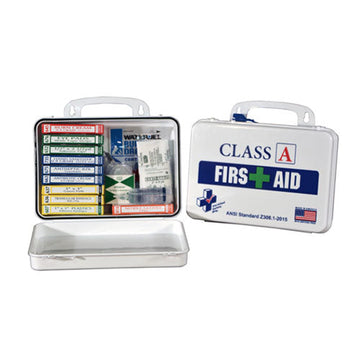



First Aid Only 10 Person ANSI 2021 Class A Metal First Aid Kit | Custom Logo
A labeled ANSI 2021 Class A kit in a metal case for up to 10 people — the small-office standard.
$60.95
View product

Rescue Supply · Workplace Safety
What ANSI/ISEA Z308.1 actually asks of a workplace first aid kit, in plain language — the two kit classes, the full contents table, and how to choose, place and restock the right kit for your workplace.

Two different bodies get mentioned in every first aid conversation, and they do different jobs. OSHA is the regulator: its general-industry rule (29 CFR 1910.151) requires employers to ensure first aid supplies are readily available, and some industries have their own additional rules. OSHA does not publish a kit contents list, and it does not approve or certify first aid kits — any kit marketed as "OSHA approved" is using the phrase loosely. ANSI/ISEA Z308.1 is the consensus standard that fills the gap: it sets the minimum contents for workplace first aid kits and organizes them into two classes. Employers use it as the benchmark for what a kit should contain, then add supplies for the specific hazards of their site. Everything on this page is a summary to work from — verify the details against the current edition of the standard (Z308.1-2021) and the OSHA requirements for your industry.

Class A kits cover the common injuries of lower-risk workplaces. Class B kits contain everything in Class A in larger quantities, plus a short list of additional items — a splint, a tourniquet and a wider roller bandage — for workplaces with more people, more hazards, or more complex risks. These are the standard’s minimum fills; a kit is only at its class minimum while every line is present and in date.
| Required item (minimum fill) | Class A | Class B |
|---|---|---|
| Adhesive bandage, 1″ × 3″ | 16 | 50 |
| Adhesive tape, 2.5 yd total | 1 | 2 |
| Antibiotic application, 1/57 oz | 10 | 25 |
| Antiseptic, 1/57 oz | 10 | 50 |
| Breathing barrier | 1 | 1 |
| Burn dressing (gel-soaked), 4″ × 4″ | 1 | 2 |
| Burn treatment, 1/32 oz | 10 | 25 |
| Cold pack, 4″ × 5″ | 1 | 2 |
| Eye covering with means of attachment, 2.9 sq in | 2 | 2 |
| Eye/skin wash | 1 fl oz total | 4 fl oz total |
| First aid guide | 1 | 1 |
| Foil blanket, 52″ × 84″ | 1 | 1 |
| Hand sanitizer, 1/32 oz | 10 | 20 |
| Medical exam gloves | 2 pairs | 4 pairs |
| Roller bandage, 2″ × 4 yd | 1 | 2 |
| Roller bandage, 4″ × 4 yd | — | 1 |
| Scissors | 1 | 1 |
| Splint, 4″ × 24″ | — | 1 |
| Sterile pad, 3″ × 3″ | 2 | 4 |
| Tourniquet, 1.5″ wide | — | 1 |
| Trauma pad, 5″ × 9″ | 2 | 4 |
| Triangular bandage, 40″ × 40″ × 56″ | 1 | 2 |
Minimum contents summarized from ANSI/ISEA Z308.1-2021, Table 1. The standard also classifies kit containers by type (Types I–IV, from fixed indoor stations to rugged portable kits). Confirm details against the current edition and your industry’s requirements before relying on them.
The standard’s own framing is the right starting point: Class A is intended for common workplace environments, Class B for more complex, populated or higher-risk ones. In practice, buyers usually land here:
| Workplace | Typical starting point | Notes |
|---|---|---|
| Office, retail, professional services | Class A | Add eye wash and burn supplies where kitchens, labs or workshops are part of the site |
| Warehouse, distribution, light manufacturing | Class B | Larger counts match headcount and injury profile; stations at both ends of large floors |
| Manufacturing, construction, industrial | Class B, plus hazard-specific extras | The standard expects a hazard assessment on top of the minimum fill — burns, eye injuries and trauma risks drive the extras |
| Fleet, field crews, remote sites | Portable kit (Class A or B contents) | One kit per vehicle or crew; restock from a central supply order |
| Schools, gyms, public facilities | Class A or B by occupancy | Multiple kits by building and floor; pair with an AED station for a complete response point |
General guidance only — your own hazard assessment and industry rules make the final call.
The class sets the contents; the format sets how the kit is stored and carried. Portable kits in soft or hard cases ride in vehicles, go to job sites and hang by a door. Wall-mounted kits fix the location so everyone knows where first aid lives. Cabinet stations — the multi-shelf metal cabinets common in warehouses and schools — hold Class B quantities and refill stock in one visible place, and are the easiest format to inspect at a glance. Many workplaces run a cabinet station as the hub and portable kits as the spokes.

OSHA’s phrase is "readily available," and placement is how you honor it. Put kits where injuries are likeliest and help arrives fastest: near (not inside) the hazard areas, on every floor of multi-story buildings, and at a density that keeps a kit within a short walk from any workstation. Mark each location with signage, keep the path to it unobstructed, and make sure new hires learn the locations during orientation — a compliant kit nobody can find is a paperwork solution, not a first aid solution.
A kit drifts below its minimum the first time someone takes a bandage. Stay ahead of it with a simple routine:
The requirement to have supplies available follows your people off-site. Vehicle and crew kits should match the crew’s work — a road crew needs trauma and burn capacity a sales fleet does not — and live somewhere the crew can reach with the vehicle loaded, not buried under cargo. Remote sites add two wrinkles: response times are longer, so kits trend toward Class B contents, and someone on the crew should be trained and designated, since the kit is only as good as the person using it.
Ready to buy? These are the kits employers order most, from a labeled ANSI 2021 Class A kit to the Kemp USA unit kits sized by headcount. The full range — 768 kits and stations — is in First Aid Kits, and every consumable in the table above is stocked in First Aid Supplies for restocking.
A labeled ANSI 2021 Class A kit in a metal case for up to 10 people — the small-office standard.
$60.95
View product
Kemp USA’s 10-person / 10-unit kit, sold as ANSI/OSHA compliant — compact wall or shelf placement.
$24.00
View product
35-person / 24-unit kit (227 pieces) for mid-size workplaces stepping up from a basic kit.
$50.00
View product
50-person / 36-unit kit (327 pieces) — the larger-count option for warehouses, schools and facilities.
$65.00
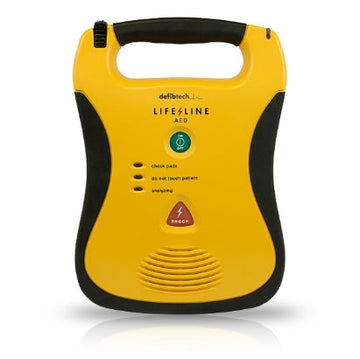
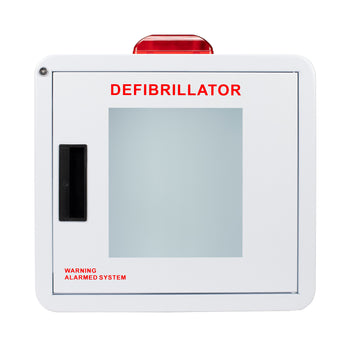
View productBuilding a complete readiness point? Pair the kit with an AED cabinet and an AED machine so first aid and defibrillation live in the same visible location.
Under ANSI/ISEA Z308.1, both classes require the same core item list, but Class B requires larger quantities of most items and adds three things Class A does not: a 4″ roller bandage, a splint and a tourniquet. Class A suits common, lower-risk workplaces; Class B is intended for more complex, populated or higher-risk environments.
OSHA requires employers to have first aid supplies readily available (29 CFR 1910.151 for general industry), but it does not publish a contents list. Employers use ANSI/ISEA Z308.1’s minimum contents as the benchmark, then add supplies for their specific hazards. Some industries have additional OSHA rules.
No. OSHA does not approve, certify or endorse first aid kits or any other commercial product. Kits are built to meet the ANSI/ISEA Z308.1 standard; treat any "OSHA approved" marketing phrase as shorthand, not a certification.
There is no fixed number in the standard. It depends on headcount, floor area, number of floors and where hazards are concentrated. The working rule is that every employee should be within a short walk of a stocked kit — large or multi-floor sites need several.
The Class B minimum fill is listed in the table on this page: larger quantities of the Class A core items (for example 50 adhesive bandages and 50 antiseptic applications), plus a splint, a tourniquet and a 4-inch roller bandage. Verify against the current edition of ANSI/ISEA Z308.1.
Inspect on a regular schedule — monthly is common practice — and restock immediately after any use. Replace expired antiseptics, ointments and eye wash, and check that the kit still meets its class minimum after every inspection.
Employers’ first aid obligations follow their people, so vehicles, field crews and temporary job sites should carry portable kits matched to the work. One kit per vehicle or crew, stored somewhere reachable, is the usual setup.
It is the American National Standard for minimum requirements for workplace first aid kits and supplies — the contents, classes (A and B) and container types used across U.S. workplaces. The current edition is Z308.1-2021.
Keep Reading
Workplace Readiness
Tell us your headcount, your setting and your hazards, and we will recommend a kit class and format — or price a full multi-site rollout.
Product selection guidance is informational. Check current specifications, availability, manufacturer instructions and any applicable clinical, safety or regulatory requirements before purchasing.