



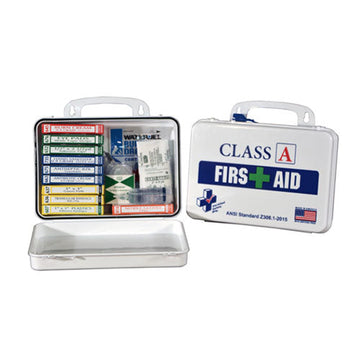

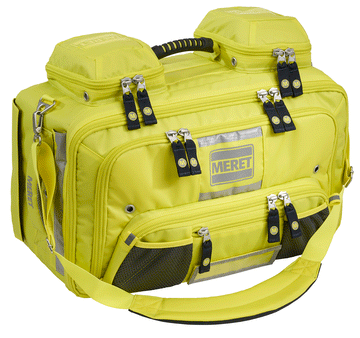





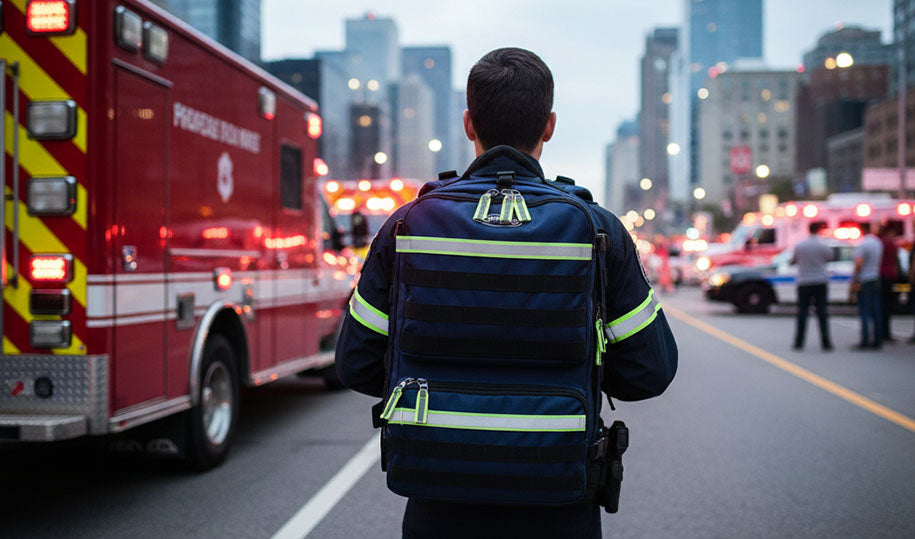
First responder bags are specialized medical kits designed to house the tools necessary for immediate, lifesaving interventions. Unlike a standard first aid kit, these bags are the front line for managing severe trauma including catastrophic hemorrhaging, airway obstructions, and cardiac emergencies.
Whether used by EMS personnel, firefighters, or prepared citizens, a well-organized trauma bag is the difference between chaos and a coordinated rescue.
Understanding the Role of a Trauma Bag
The primary purpose of a trauma bag is speed. These kits are engineered to provide "blind-reach" access to supplies, allowing responders to treat patients effectively at the point of injury.
Offers the durability needed for rapid transport and storage in emergency vehicles.
Internal loops and compartments prevent "gear dump," keeping small items from disappearing.
Reflective striping and bright coloring ensure the bag can be located in low-light environments.
Types of Response Bags
Choosing the right bag depends on your operational role and the level of care required:
- Basic Life Support (BLS): Essentials for stabilization and wound care.
- Advanced Life Support (ALS): Equipped for airway management and IV administration.
- Tactical Trauma Bags: Rugged, compact, and often MOLLE-compatible.
- Jump Bags: Comprehensive kits staged on emergency vehicles for rapid deployment.
Essential Items to Pack: The Checklist
Organization should follow MARCH or ABC protocols. Critical components include:
1. Bleeding Control (The Priority)
- Tourniquets (CAT or SOF-T)
- Hemostatic Gauze
- Pressure Bandages
2. Airway & Respiration
- NPA and OPA adjuncts
- Bag Valve Mask (BVM)
- Chest Seals
Organization for Peak Efficiency
| Zone | Priority | Recommended Items |
|---|---|---|
| External/Front | Personal Safety | Nitrile gloves, safety glasses, trauma shears. |
| Right Side | Massive Bleeding | Tourniquets, hemostatic gauze, pressure dressings. |
| Left Side | Airway/Breathing | Chest seals, NPA, OPA, rescue inhalers. |
| Main Center | Stabilization | BVM, splints, IV bags, diagnostic gear. |
Top Recommended First Responder Bags
1. EMI Search and Rescue Response Kit
Best For: Wilderness operations. A rugged build with a slim profile that prevents snagging in tight spaces.
2. Elite First Aid First Responder Bag
Best For: Remote Medics. Features a massive interior and includes a suture kit for long-term care scenarios.
3. First Aid Only Enhanced Bag
Best For: High-Intensity Trauma. 168 curated pieces for rapid deployment across professional teams.
Conclusion
A first responder bag is more than a collection of bandages; it is a mobile life-support system. By selecting high-quality materials and maintaining a strict organizational hierarchy, you ensure that you are ready when every second counts.