









Mobility aids come in many forms, but walkers and rollators remain the most versatile solutions for those who require assistance but do not yet need a full wheelchair. While they may look similar, they serve distinct functional needs. Choosing the right one is essential for your safety, confidence, and long-term independence.
What Is a Walker?
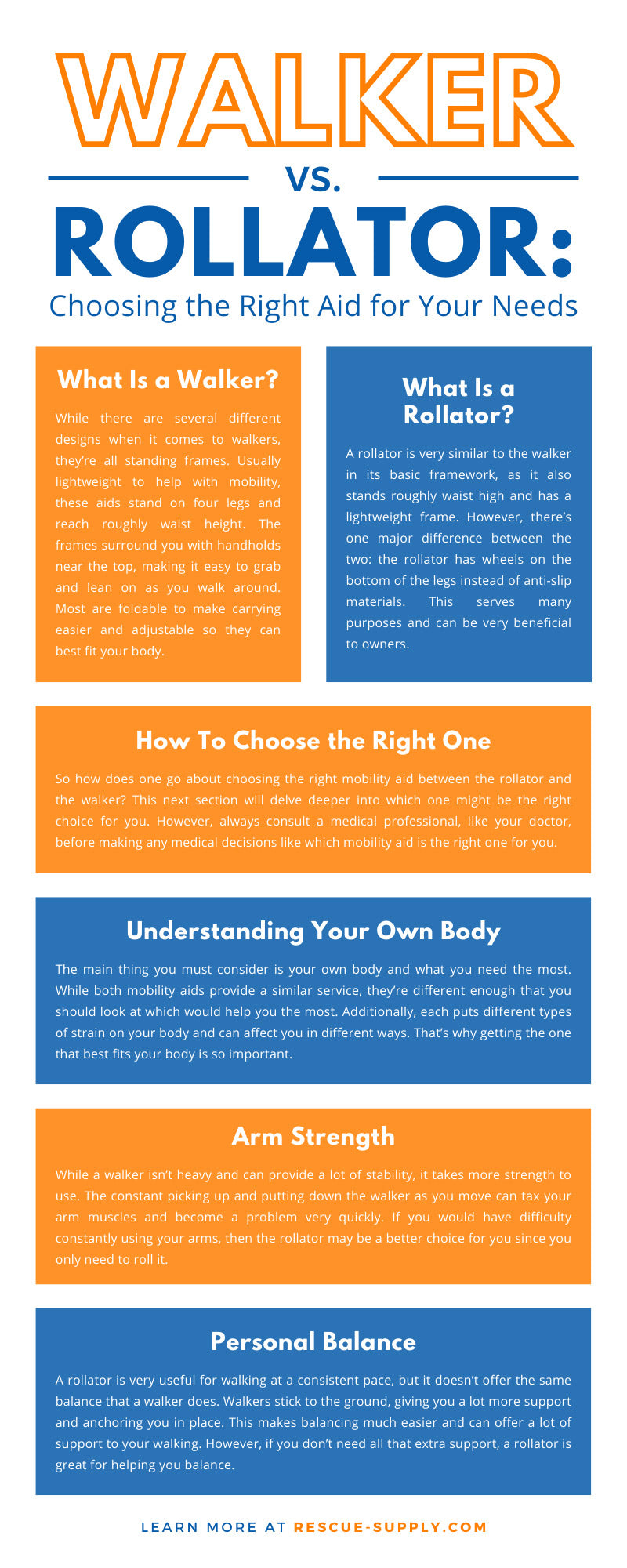
A walker is a stable standing frame with four legs that touch the ground. Designed to be lightweight and height-adjustable, it provides a sturdy perimeter of support. Users typically lift the walker and move it forward, making it the gold standard for those requiring maximum weight-bearing assistance.
What Is a Rollator?
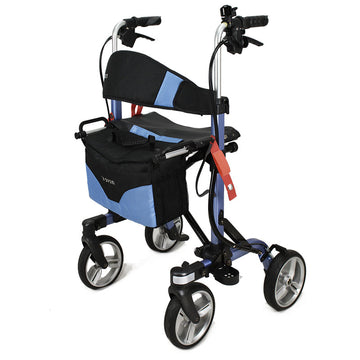
A rollator features a similar waist-high frame but includes wheels on every leg. This design facilitates a more fluid, continuous walking motion without the need to lift the device. It is ideal for users who have the strength to walk but need help with balance and endurance.
Key Features of Rollators
- Wheel Configurations: Choose 3-wheel models for tight indoor spaces or 4-wheel models for maximum outdoor stability.
- Integrated Braking: Hand brakes are essential for controlling speed on slopes and locking the unit for safe sitting.
- Built-in Seating & Storage: Most rollators come equipped with a padded seat and a basket, perfect for shopping or long walks.
Why the Differences Matter
A rollator walker is built for speed and distance, whereas a standard walker is built for stability and safety. Understanding these nuances ensures you select an aid that enhances your lifestyle rather than creating new physical hurdles.
Stability vs. Ease of Motion
If balance and significant weight-bearing support are your primary concerns, a walker is often the superior choice. Because it stays stationary until moved, it "anchors" to the floor. Conversely, if you want a device that flows with your natural gait and requires less physical exertion to move, a rollator is the more efficient option.
How to Choose: The Comparison
Arm Strength & Coordination
Standard walkers require you to lift and place the frame with every step. If you have limited upper body strength, the rolling motion of a rollator may be more manageable and less tiring.
Safety & Fall Prevention
If you are prone to falls or need to lean heavily on your aid, the stationary legs of a walker provide a safer, more grounded foundation than a wheeled device which could roll away if not braked correctly.
Your Environment: Indoor vs. Outdoor
Standard walkers are generally narrower, making them easier to maneuver through tight bathroom doors or narrow hallways. Rollators, however, are the "all-terrain" choice. Their larger wheels handle uneven sidewalks, grass, and gravel far better than the rubber tips of a walker.
The Final Verdict
Choose a Walker if: You are recovering from surgery, have significant balance issues, or primarily need a sturdy frame to help you stand and take short steps indoors.
Choose a Rollator if: You can walk independently but tire easily, enjoy outdoor excursions, or need the convenience of a built-in seat for frequent rests.
Expert Tip: Always consult with a physical therapist before purchasing. They can ensure the handle height is adjusted correctly to prevent back pain and verify that the brake tension is set for your specific grip strength.