




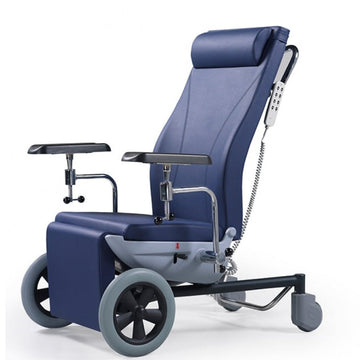


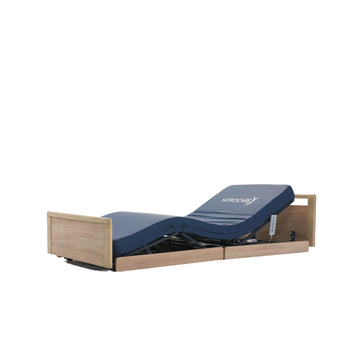


A dialysis chair is used to seat or recline a patient during hemodialysis and other long clinical treatment sessions so care teams can connect vascular access, run the prescribed treatment, and monitor the patient in a dialysis or infusion station. It is supportive clinical seating, not a therapy by itself.
Quick answer: During in-center hemodialysis, patients usually remain at a treatment station for about four hours while blood is filtered outside the body and returned. Clinics commonly use reclining treatment chairs at those stations. Exact chair features vary by model and manufacturer.
What happens during hemodialysis
Hemodialysis filters wastes and extra fluid from the blood when the kidneys can no longer do enough of that work. During treatment, blood moves through a dialyzer (sometimes called an artificial kidney) and returns to the body. NIDDK notes that in-center sessions are commonly about four hours, often three times per week, and that staff help set up and connect patients at a dialysis center.
Patients typically sit or recline for the full session. They may read, rest, or use entertainment options allowed by the center. This page explains the chair's role in that setting. It does not provide medical instructions.
How a dialysis chair supports the session
A dialysis chair is the station seating that keeps the patient supported for a multi-hour treatment while staff work around vascular access and equipment. Useful clinical seating traits often include adjustable backrest and leg support, stable locking casters for a fixed station, armrest designs that allow access to fistula or graft sites, and upholstery that can be wiped between patients. Which of those features a specific chair includes depends on the model.
Dialysis chair vs a standard recliner
| Topic | Clinical dialysis chair | Standard recliner |
|---|---|---|
| Primary setting | Dialysis, infusion, or similar treatment suites | Home or waiting areas |
| Session length focus | Built for repeated multi-hour clinical use | Not designed as medical treatment-station seating |
| Access and workflow | Often supports arm access, locking mobility, and staff reach | Limited clinical access features |
| Cleaning | Usually wipe-clean materials for shared-patient use | Varies; often not specified for clinical disinfection |
| Documentation | Use product specs and manufacturer IFU | Consumer furniture guidance only |
A standard recliner may look similar, but it is not a substitute for a chair selected under facility purchasing standards and manufacturer intended-use language.
Features that vary by model
Do not assume every dialysis chair includes the same controls or ratings. Common variables include:
- Manual vs motorized positioning
- Whether Trendelenburg positioning is listed for that model
- Stated weight capacity
- Armrest style and swing-away options
- Caster locking and station mobility
- Upholstery type and cleaning method
If a feature matters for your protocol, verify it on the individual product page and in the manufacturer instructions for use. Presence of a positioning option is not medical advice about when to use it.
Clinic purchasing considerations
- Match the suite: dialysis only, mixed infusion, or chemotherapy-capable stations where the model is labeled for those uses.
- Confirm capacity: use the weight rating stated for the exact model.
- Plan access: armrest and side clearance for vascular access and staff workflow.
- Check controls: manual vs powered adjustments for your staffing model.
- Review cleaning: follow manufacturer disinfection guidance for shared clinical use.
- Keep IFU with the asset: train staff to the manufacturer instructions for use and your facility policy.
Intended use and manufacturer guidance
Select chairs for professional clinical settings according to the manufacturer's intended-use statements. Rescue Supply lists facility-oriented Nitrocare models for dialysis and related treatment suites. Follow the product page specifications and the manufacturer IFU for setup, operation, cleaning, and any positioning features. This article does not recommend home use, clinical procedures, or emergency interventions.
Where to browse at Rescue Supply
For buying-intent browsing, start with the dialysis chairs collection. Active Nitrocare models currently listed include:
- Nitrocare AURA 911 chemotherapy and dialysis recliner
- Nitrocare Lumi 908 motorized clinical care chair
- Nitrocare VITALIS 912 motorized dialysis and chemotherapy chair
A related buyer page is also available: dialysis chairs for treatment facilities.
Short answers
What is a dialysis chair used for?
Supportive, adjustable clinical seating during hemodialysis and other long treatment sessions in a dialysis or infusion suite.
How is it different from a standard recliner?
It is selected for clinical station workflows, shared-patient cleaning routines, and model-specific positioning or capacity ratings documented by the manufacturer.
Are these chairs only for hemodialysis?
Hemodialysis is the focus of this guide. Some models are also labeled for chemotherapy or infusion. Confirm on the product page.
What should a clinic compare first?
Controls, capacity, arm access, locking casters, cleaning guidance, and any listed Trendelenburg feature for that exact model, plus the manufacturer IFU.
Sources
- NIDDK: Hemodialysis (what hemodialysis is, in-center session length, center vs home dialysis context)
- National Kidney Foundation: Hemodialysis (patient-facing overview of hemodialysis)
- Washington University Kidney Resource Center: In-Center Dialysis (describes assigned stations with reclining chairs)
- Manufacturer product pages and instructions for use for each Nitrocare model linked above (feature and capacity details)