





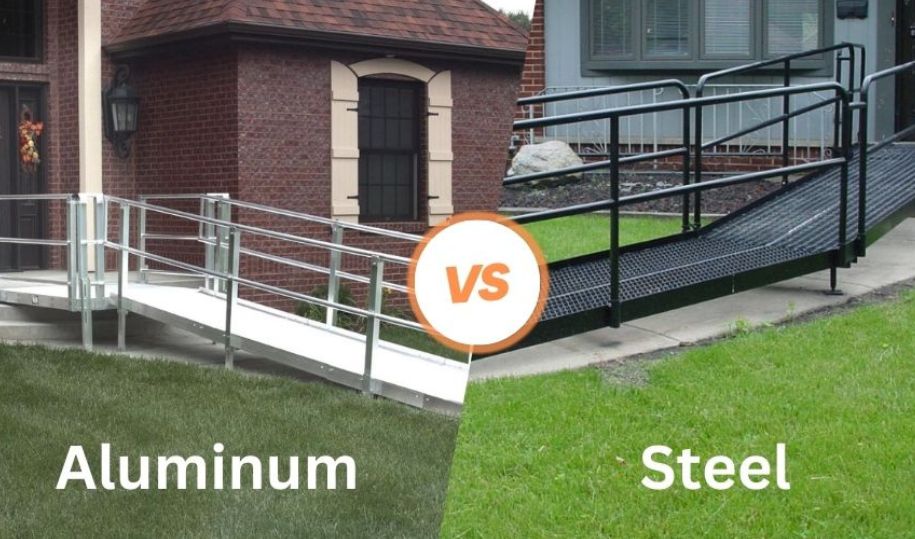
For most home and facility wheelchair entrances, aluminum ramps are the better practical choice. They are lighter than comparable steel sections, do not rust the way uncoated steel does, and are the material used in the modular and portable systems commonly listed for wheelchair access. Steel can still make sense for specialty high-load, stationary industrial structures, but those builds need coating care outdoors and are harder to move.
What this comparison covers
This guide compares steel and aluminum as ramp materials for wheelchair and mobility-device access at homes, schools, businesses, and care facilities. It does not rate a specific installation as code compliant. Local requirements and the finished layout (slope, landings, handrails, edge protection) determine whether an installation meets accessibility rules.
Aluminum wheelchair ramps
- Corrosion behavior: Aluminum forms a protective oxide layer and does not rust the way uncoated steel does. That is why aluminum is common for outdoor modular and portable ramps.
- Weight: Aluminum sections are lighter than comparable steel sections, which helps with sectional installation, relocation, and portable fold or roll-up designs.
- Maintenance: Aluminum systems typically need less coating maintenance outdoors than painted or galvanized steel, though surfaces still need cleaning and winter care.
- Catalog fit at Rescue Supply: Modular and portable wheelchair ramps we list are predominantly aluminum systems from makers such as Rampit USA, National Ramp, Roll-A-Ramp, and SafePath.
Steel wheelchair ramps
- Strength and mass: Steel can be fabricated for very heavy industrial structures. That mass also makes sections harder to move and assemble without equipment.
- Corrosion care: Steel used outdoors generally needs protective coatings (for example galvanizing or paint). Damaged coatings can allow rust at edges, fasteners, and scratches.
- Wheelchair-access catalog note: Modular and portable wheelchair ramps listed on Rescue Supply are predominantly aluminum systems. If a project needs custom steel fabrication, treat that as a specialty build outside the standard modular aluminum systems on the site.
Side-by-side factors
| Factor | Aluminum | Steel |
|---|---|---|
| Outdoor rust risk | Does not rust like steel; still clean debris, snow, and ice | Needs coatings; inspect for coating damage |
| Section weight | Lighter; easier to install or relocate in sections | Heavier; often needs more labor or equipment |
| Typical wheelchair-ramp formats | Modular bolt-together, folding, roll-up, threshold | More often custom or industrial fabrication |
| Maintenance | Usually low coating maintenance | Periodic coating and rust attention |
| Best fit (general) | Most home and facility wheelchair entrances | Specialty high-load industrial structures (not typical portable access) |
How to decide for a wheelchair entrance
- Measure the rise first, then plan ramp length. Many new-construction accessibility layouts use a maximum 1:12 slope (12 inches of run for each inch of rise). Confirm what applies to your project.
- Choose width from the mobility device clear width and whether helpers walk alongside.
- Pick a surface for the environment (open mesh vs solid) and follow the manufacturer care instructions for wet or winter weather. No surface guarantees grip on ice.
- For modular systems, plan platforms and turns with the product line you select. See the Modular Wheelchair Ramps collection and Ramp Length Guide.
Where to shop next on Rescue Supply
- Modular systems
- Portable and threshold options
- Broader wheelchair ramp hub
- Commercial quote context
- Residential modular guide
- Ramp length planning
- Cost-focused aluminum guide
Short answers
Are steel or aluminum wheelchair ramps better?
For many home and facility wheelchair entrances, aluminum is the practical choice because it is lighter, does not rust like steel, and matches common modular and portable product lines. Steel is more often used for specialty high-load industrial structures that stay in place. Project needs still vary.
Are aluminum ramps better than steel for outdoor use?
Aluminum is commonly chosen outdoors because it forms a protective oxide layer and does not rust the way uncoated steel does. Steel used outdoors generally needs protective coatings, and damaged coatings can allow rust at edges, fasteners, and scratches.
Does buying an aluminum ramp make the installation ADA compliant?
No. Material alone does not determine compliance. Slope, clear width, landings, handrails, and other layout details matter. Check applicable requirements and the manufacturer guidance for the system you install.
Does Rescue Supply sell steel wheelchair ramps?
Modular and portable wheelchair ramps listed on Rescue Supply are predominantly aluminum systems from makers such as Rampit USA, National Ramp, Roll-A-Ramp, and SafePath. Use the modular and portable aluminum collections linked above for standard wheelchair access projects.