





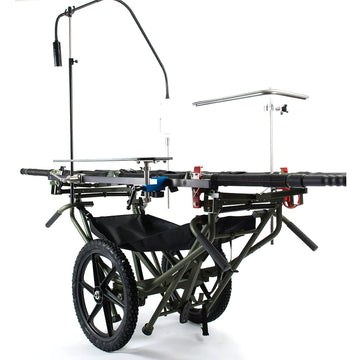

Bestcare BestLift® PL182: Compact Electric Full-Body Patient Lift for Small Rooms
Compact full-body electric lift built for smaller rooms and tighter turning circles.
View product
Rescue Supply · Patient Lifts
Choosing a patient lift for home is really three decisions: the lift type that matches what the person can still do, the capacity and sling that fit their body, and a machine that works in your actual rooms. This guide walks through all three, then points you to the lifts that fit.

Every home lift answers the same question — how much of the transfer can the person still do themselves? Answer that honestly and the category usually chooses itself.
A mobile hoist on casters that lifts the person fully supported in a sling: bed to wheelchair, chair to commode, or up from the floor after a fall. The default choice when the person cannot bear weight. Browse full-body patient lifts
For people who can bear some weight through their legs and hold on: the lift brings them to a supported standing position for toileting, dressing and chair transfers, and keeps leg muscles working. Browse sit-to-stand lifts
A motor travelling on a fixed or free-standing overhead track. There is nothing to push, steer or store, and the floor stays completely clear — the strongest option in small rooms and for set routes used many times a day. Browse ceiling lifts
For the tub and for short moves: bath lifts lower and raise the person in the water, while transfer boards and sheets bridge the gap between bed, chair and commode. Browse bath lifts
| Full-body floor lift | Sit-to-stand lift | Ceiling lift | |
|---|---|---|---|
| Who it suits | Someone who cannot bear weight, or cannot sit upright unaided | Someone who can bear weight through their legs and grip the handles | Anyone, including full dependence on the lift |
| How the transfer works | The person rests in a sling; the lift raises, rolls and lowers them | The lift supports the person up to standing, then pivots to the new seat | A motor on an overhead track carries the person along a set route |
| Room it needs | Floor space to roll and turn; the legs must slide under the bed | Less turning room than a full-body lift | No floor space at all; the track must span the route |
| The caregiver’s job | Steer the lift, work the control, guide the sling | Position the sling and knee support, supervise the stand | Guide the person — the track does the moving |
Still deciding between the two mobile types? Our Sit-to-Stand vs. Full Patient Lifts comparison works through that decision in detail, and the Electric Patient Lifts for Home Use guide covers powered floor lifts specifically — batteries, charging and backup operation included.
Most home lift disappointments are measuring problems, not machine problems. Work through these checks before you order and the lift that arrives will be the lift that fits.
Every lift carries a rated safe working load, and it is a ceiling rather than a target. Standard home lifts are commonly rated from 350 to 450 lb; bariatric models run 500 lb and above, with wider bases and reinforced slings to match. If the person is anywhere near a model’s limit, move up a class — the lift runs more smoothly, the sling fits better, and the equipment lasts longer. Heavier-duty options are gathered in our Bariatric Patient Lifts collection.
A lift is only as good as its sling. The sling is what actually holds the person, so it deserves the same care as choosing the machine. Universal slings handle everyday seated transfers; full-body slings add head and trunk support for someone who cannot sit upright; toileting slings leave access for clothing and hygiene at the commode; and mesh slings drain and dry quickly for bathing and showering.
Size from the manufacturer’s own chart, which matches sling sizes to weight and torso measurements — never from clothing sizes. Confirm the attachment style, loops or clips, matches your lift’s spreader bar, and check the sling over before every use: worn stitching or frayed straps mean it is retired, not repaired. Browse the range in our Patient Lift Slings collection, and find batteries, casters, scales and other running gear in Patient Lift Accessories.
Both routes put the same machines in the home. The real difference is how long you need one, and how settled that need is. Four situations cover most households:
After a surgery or injury with a clear rehabilitation timeline, renting covers the recovery window without a long-term commitment to equipment you will stop using.
When lifting becomes part of every day with no end date, owning the lift means it is always there — set up for your rooms, with a sling fitted to one person.
If strength or weight is changing, choose versatility: a full-body lift keeps working as abilities change, while a sit-to-stand lift only works for as long as the person can bear weight.
Confirm the sling is included and sized before the first transfer, and run the same checks either way: lift type, capacity, sling fit, and the rooms it has to work in.
Questions about a specific home are easier to answer before the lift arrives than after — our team will check capacity, sling and room fit with you; see the panel at the foot of this page.
Four lifts that between them cover most home situations: a compact full-body model, a powered sit-to-stand, a higher-capacity lift, and a foldable design for smaller homes.
Compact full-body electric lift built for smaller rooms and tighter turning circles.
View product
Powered sit-to-stand lift for people who can bear weight — toileting, dressing and chair transfers.
View product
Higher-capacity electric lift rated to 500 lb, for heavier users and a margin of safety.
View productFoldable mobile lift that stores away between transfers — a fit for smaller homes.
View productThe full home lift range: full-body floor lifts in manual and powered versions.
Browse the collectionStanding lifts for people who can bear weight and take part in the transfer.
Browse the collectionOverhead track systems that keep the floor clear and the route effortless.
Browse the collectionUniversal, full-body, toileting and mesh slings, sized from the makers’ charts.
Browse the collectionIt depends on how much the person being lifted can help. A full-body floor lift is the most versatile default: it works for someone who cannot bear weight at all, for almost every transfer in the home, and for lifting from the floor after a fall. A sit-to-stand lift is better when the person can bear weight through their legs and hold on, and a ceiling lift suits small rooms or a fixed route used many times a day.
Yes. Home patient lifts, manual and powered alike, are designed to be operated by a single caregiver: one hand works the control or pump while the other steadies the lift. Fit the sling carefully, follow the manufacturer’s instructions for the model, and practise the full route — bed to chair and back — before the first real transfer.
Most mobile home lifts roll through standard interior doorways, but measure the narrowest doorway on your transfer route and compare it with the lift’s base width, especially on wider bariatric models. Lifts roll best on hard flooring and low-pile carpet; thick carpet and rugs make any floor lift harder to push and steer, and models with larger casters cope better.
Size the sling from the manufacturer’s own chart, which matches sizes to the person’s weight and torso measurements — do not guess from clothing sizes. Then confirm the sling’s attachment style (loops or clips) matches your lift’s spreader bar, and that the sling’s rated capacity is at least the lift’s.
Choose a lift whose rated safe working load sits comfortably above the person’s weight — capacity is a ceiling, not a target. Standard home lifts are commonly rated from 350 to 450 lb, and bariatric models at 500 lb and above. If the person is close to a model’s limit, move up a class and pair the lift with a sling rated for the same capacity.
Decide by how long the need will last. Renting suits a short, defined recovery — after surgery, for example — where the timeline is known. Buying suits an ongoing need with daily transfers and no clear end date, and it means the sling is fitted to one person and kept at home. If the person’s strength or weight is changing, a versatile full-body lift adapts across more situations than a sit-to-stand model.
Keep Reading
Home Care
Tell us the user’s weight, the rooms involved and the transfers you need to make, and a specialist will confirm capacity, sling and room fit before you order.
Product selection guidance is informational. Check current specifications, availability, manufacturer instructions and any applicable clinical, safety or regulatory requirements before purchasing.