





Stop the Bleed Kits for Schools
Rescue Supply · School Safety
Bleeding Control Kits for Schools
Severe bleeding can become life threatening in minutes. Placing bleeding control kits in classrooms, gyms, cafeterias, and main offices lets trained staff act before EMS arrives.

Featured bleeding control products
Kits, storage, and signage to build a school bleeding control program.
01Cubix Safety Intermediate Bleeding Control Kit
An intermediate kit for responding to severe bleeding.
View product 02
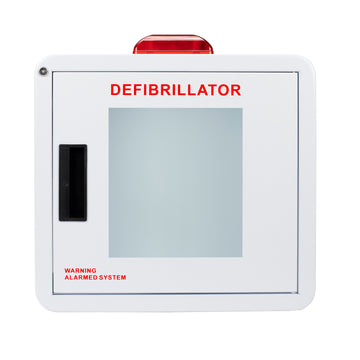
Bleeding Control Wall Cabinets
Alarmed and standard cabinets to store kits in visible, accessible spots.
View an alarmed cabinet 03
Bleeding Control Signs and Decals
Wall signs and decals so staff can find kits fast.
View wall sign
Also see the standard non-alarmed cabinet, the on-site decal, Bleeding Control Kits & Stations, Tourniquets, and AED Cabinets.
Placement tips
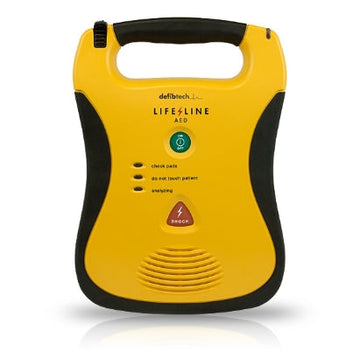
Co-locate with AEDs
Put bleeding control near AEDs so staff learn one location for emergency equipment.
Use clear signage
Mark every kit with a sign or decal visible from the hallway.
Cover high traffic areas
Prioritize gyms, cafeterias, main offices, and busy classroom wings.
Follow state and district requirements
Check what your state and district require before finalizing placement and quantities.
Pair kits with training
Kits work best when staff know how to use them. Pair every kit rollout with Stop the Bleed training for staff, and refresh it on a regular schedule.
What a school bleeding control kit should contain
A bleeding control kit is built around a few tools that let a trained adult stop severe bleeding until EMS takes over. Compare kits by what is inside, not by the size of the bag.
| Component | What it is for | Where to find it |
|---|---|---|
| Tourniquet | Stopping life threatening bleeding from an arm or leg | SOF tactical tourniquet or EMI emergency tourniquet |
| Pressure or compression bandage | Holding firm pressure on a wound after it is packed or covered | BleedStop bandage or Hema-Flex compress |
| Gauze for wound packing | Filling deep wounds where a tourniquet cannot be applied, such as the shoulder or groin | Included in most complete kits |
| Medical gloves | Protecting the responder from blood exposure | Included in most complete kits |
| Trauma shears and a marker | Cutting clothing to reach a wound and noting the time a tourniquet went on | Included in most complete kits |
| Instruction card | Prompting the steps under stress | Check the kit contents list |
Contents vary by manufacturer and kit level. Confirm the full contents list on each product page before ordering.
Individual kits, multi-victim bags, and wall stations
Most schools combine formats so there is a kit close to every space and a larger supply where many people gather.
Individual kits
One kit per classroom, office, or vehicle. A kit such as the Kemp USA Bleeding Control Trauma Kit is sized to treat one person and is easy to grab and carry.
Multi-victim bags
For gyms, auditoriums, and stadiums, a bag like the First Aid Only Bleeding Control Multiple Victim Bag puts supplies for several patients in one place.
Wall stations
Wall stations hold several kits in a fixed, visible spot. Compare the standard and deluxe First Aid Only wall stations for hallways and main offices.
Cabinets and signage
Cabinets protect kits from tampering and dust, and signs make them easy to find. Many schools mount them next to the AED so staff learn one location.
How many kits does a school need?
There is no single number that fits every building. Work through the campus room by room and let distance and occupancy guide the count.
- Map the building first. Mark every classroom wing, stairwell, gym, cafeteria, library, auditorium, and main office on a floor plan.
- Think in walking time. Place kits so a staff member can reach one quickly from any occupied space, including portable classrooms.
- Add capacity where crowds gather. Gyms, cafeterias, and auditoriums benefit from a wall station or multi-victim bag in addition to nearby individual kits.
- Remember spaces away from the building. Athletic fields, buses, and field trip bags need kits too.
- Keep a small reserve. A few spare kits in the nurse's office or district warehouse let you replace a used kit the same day.
Inspection and replacement
A kit only helps if it is complete when someone opens it. Build a short inspection routine into your existing safety checks.
- Check seals and contents on a schedule, such as monthly or each grading period, and log the date.
- Replace anything used or opened right away, and restock tourniquets and bandages from a central supply.
- Watch expiration dates on items that carry them, and rotate stock before it lapses.
- Confirm cabinets and signs are visible and not blocked by furniture, displays, or stored equipment.
- Refresh training when staff change, so every building has people who know where kits are and how to use them.
Need more supplies? Browse tourniquets and the full bleeding control kits collection.
Frequently asked questions
Where should bleeding control kits go in a school?
Classrooms, gyms, cafeterias, and main offices, with priority on high traffic areas and alongside AEDs where possible.
Should cabinets be alarmed?
Alarmed cabinets alert nearby staff when opened, while standard cabinets are simpler. Many schools choose based on location and supervision.
Do staff need training?
Pair kits with Stop the Bleed training for staff so they can act confidently before EMS arrives.
Schools & Districts
Planning bleeding control for a school or district?
Send us your building count and placement plan, and we will quote kits, cabinets, and signage as one order.
Product selection guidance is informational. Check current specifications, availability, manufacturer instructions and any applicable safety or regulatory requirements before purchasing.