




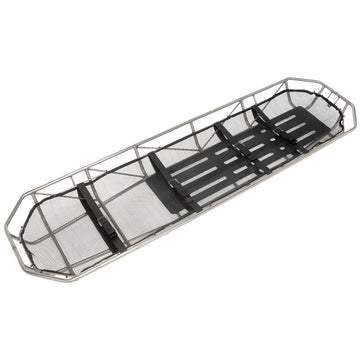
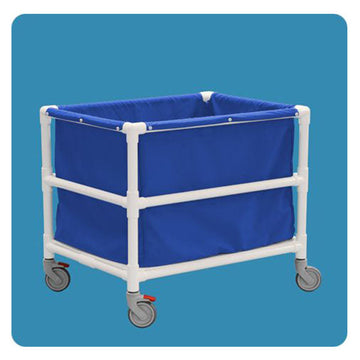

MJM PVC Medical Shower Gurney, 450 lb Capacity
Rust-proof PVC shower gurney for dependent patients, sized for standard facility shower rooms.
View product
Rescue Supply · Patient Hygiene
Showering a dependent patient safely takes the right platform: a gurney for someone who cannot sit, a height-adjustable trolley for assisted bathing, or a commode chair for someone who can sit upright. This guide compares the three, then covers bariatric capacity, infection control, behavioral health and room planning.

The deciding question is how the patient arrives at the shower. Someone who cannot sit upright needs a full-length platform; someone who can sit needs a chair that doubles as a commode; and the caregiver's working height decides between fixed and adjustable equipment.
A waterproof stretcher surface on a wheeled frame, for patients who are non-ambulatory, post-surgical or fully dependent. The patient is transferred once, showered lying down, and the same surface handles transport to and from the room. Browse shower gurneys
Padded, height-adjustable platforms, many with tilt, that raise the patient to the caregiver's working height and make turning and drying manageable. The facility workhorse for assisted bathing. Browse shower beds
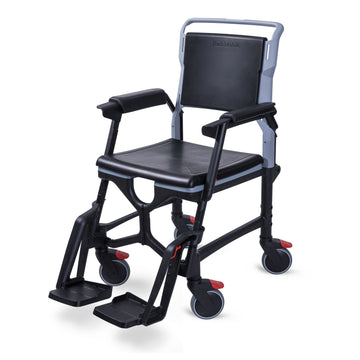
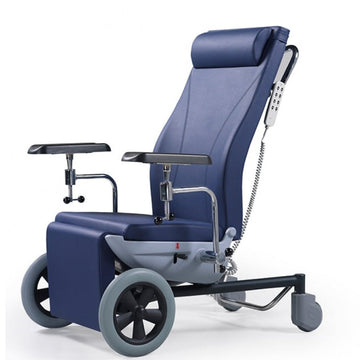
Seated hygiene for patients who can sit upright with support: the chair rolls over a toilet, then straight into a roll-in shower, so one transfer covers both. Our dedicated Shower Commode Chairs collection and the Institutional Shower & Commode Chairs guide cover this category in depth.
Whatever the platform, powered or hydraulic height adjustment protects staff backs across a full shift of showers. Fixed-height equipment is cheaper to buy and dearer in injuries; facilities showering daily should treat adjustment as standard.
| Shower gurney | Shower bed / trolley | Shower commode chair | |
|---|---|---|---|
| Who it suits | Patients who cannot sit up or bear weight | Dependent patients needing assisted bathing | Patients who can sit upright with support |
| Position | Lying flat on a stretcher surface | Lying on a padded, often tilting surface | Seated, with commode opening |
| Transfer count | One transfer on, one off | One transfer on, one off | Bed to chair, then toilet and shower in one trip |
| Caregiver effort | Good: patient stays at one level | Best: height adjusts to the caregiver | Good for seated care and toileting |
| Room it needs | Full-length turning space and a wide doorway | Full-length turning space, power or pump access | The least space of the three |
Every platform carries a rated safe working load, and the rating is a ceiling rather than a target. Standard institutional gurneys and chairs commonly serve the general population; bariatric models step up to reinforced frames, wider surfaces and ratings of 600 lb, 700 lb and beyond. If a patient's weight is anywhere near a model's limit, move up a class: the equipment tracks better, the surface supports properly, and casters and brakes last longer.
Check width as carefully as weight. A bariatric gurney that fits the patient still has to fit the doorway, the turning circle and the shower itself, and wider models deserve a tape measure before they deserve an order. The dedicated Bariatric Shower Gurneys collection gathers the reinforced range in one place.

Shower equipment is cleaned after every patient, every day, so its materials decide how well that cleaning actually works:
Behavioral health units shower the same patients with a second set of rules: everything in the room is assessed for ligature and tamper risk. The shower room needs the same environmental discipline as the bedroom.
Breakaway and hookless curtain systems are designed to release under load rather than support it. The Cortech Ligature Resistant Shower Curtain is built on that hookless security design and pairs with a ceiling-mounted breakaway track.
Curtain tracks should be breakaway or ligature-resistant designs, shower heads and controls tamper-resistant, and grab bars fitted flush. Any loop, gap or protrusion is assessed, not assumed safe.
Apply the unit's existing environmental risk assessment to the shower room, and schedule reassessment when equipment changes. Our Behavioral Health & Correctional Furniture guide covers the wider room standard.
Safety controls should be invisible in use: the room should feel like a shower room, with privacy preserved, while the risk engineering sits in the fittings.
Most shower room problems are measuring problems. Work through these before the equipment arrives:
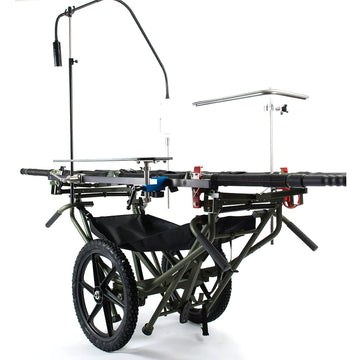
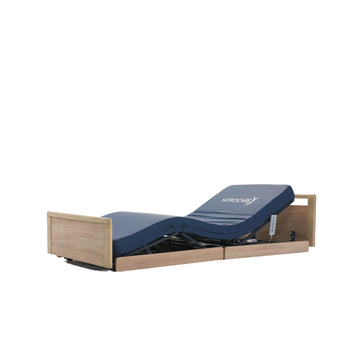
Active, facility-grade equipment from the store: PVC gurneys from MJM, an electric shower trolley from TR Equipment, and a bariatric shower bed from IPU.
Rust-proof PVC shower gurney for dependent patients, sized for standard facility shower rooms.
View product
Reinforced bariatric gurney rated to 600 lb for safe showering of larger patients.
View product
Full electric height and tilt adjustment brings the patient to the caregiver, not the other way round.
View product
Heavy-duty mobile shower bed built for bariatric patient bathing in hospitals and long-term care.
View product 01
Full-length shower platforms for dependent patients, standard and bariatric.
Browse the collection 02
Padded shower beds and trolleys, including folding and transport models.
Browse the collection 03
Seated hygiene chairs that cover toileting and showering in one transfer.
Browse the collection 04
The reinforced, higher-capacity gurney range in one collection.
Browse the collectionA shower gurney is a waterproof stretcher on casters: the patient is transferred onto it lying down and showered in that position, which suits people who cannot sit up or bear weight. A shower bed or shower trolley does the same job with a height-adjustable, sometimes tilting, padded surface, which makes washing, turning and drying easier for the caregiver and more comfortable on longer showers.
Capacity is a ceiling, not a target: choose equipment rated comfortably above the heaviest patient it will carry, and move up to bariatric models early rather than at the limit. Institutional ranges run from standard capacities through bariatric gurneys and chairs rated at 600 lb, 700 lb and above, with wider surfaces and reinforced frames to match.
Height-adjustable trolleys and beds are designed to bring the patient to a safe working height for one caregiver, but whether one staff member is enough depends on the patient's weight, tone and cooperation, and on your facility's moving and handling policy. Patients who are fully dependent or unpredictable usually need two staff, whatever the equipment.
Healthcare-grade PVC cannot rust and has no painted surface to chip, so it tolerates daily cleaning with standard facility disinfectants. Mesh slings and pads drain and dry quickly, which shortens turnaround between patients. Follow the manufacturer's cleaning instructions for pads, straps and casters, and inspect stitching and caster brakes as part of the routine.
Ligature-resistant curtains use breakaway or hookless mounting and mesh-reinforced or tear-resistant fabrics designed so the curtain releases or fails safely under load instead of supporting it, and so it cannot be used as a ligature. Pair the curtain with a breakaway track and tamper-resistant fixtures, and follow your behavioral health unit's environmental risk assessment.
Plan for the gurney's full length plus a caregiver at the side and head: a clear turning area outside the shower, a doorway the gurney passes without lifting, and a sloped floor draining to a trench or central drain so water never pools under casters. Measure the tightest doorway and the turning circle before ordering, the same as any large hygiene equipment.
Keep Reading
Hospitals & Long-Term Care
Send us the room dimensions, your patient mix and the capacities you need, and we will quote the gurneys, trolleys, chairs and curtains as one institutional order.
Product selection guidance is informational. Check current specifications, availability, manufacturer instructions and any applicable clinical, safety or regulatory requirements before purchasing.